15 Polished Job Interview Outfits and Simple Ways to Get Ready
Find an interview outfit that fits the workplace, feels comfortable and uses pieces you can wear again, with 15 ideas and a practical preparation checklist.
A good interview outfit should help you feel ready for the conversation, not give you one more thing to manage. The right choice depends on the workplace and the role: a matching suit may suit a formal office, while tailored trousers and a cardigan can feel more natural in a business-casual setting.
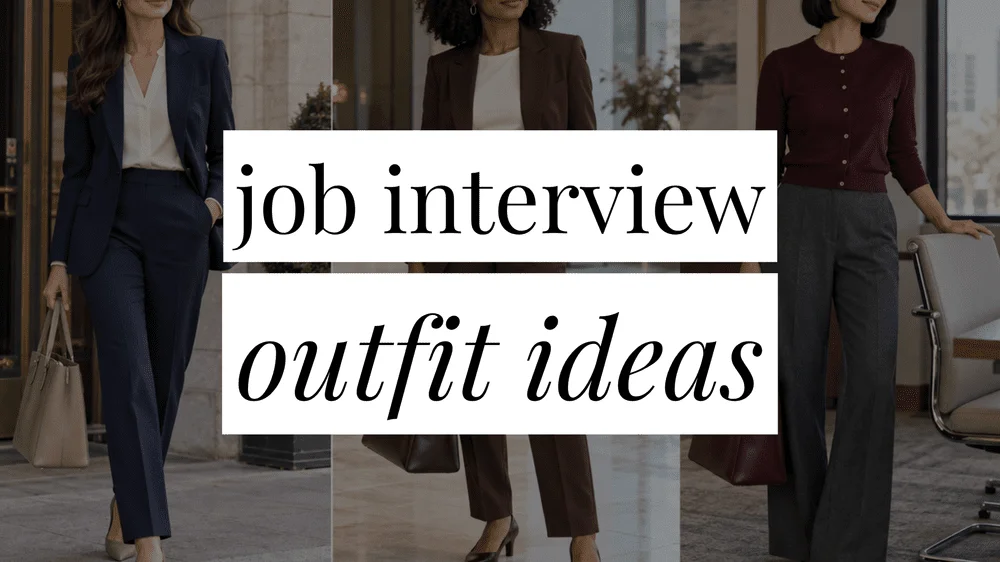
You don't need a whole new wardrobe, and you don't need to wear heels to look prepared. Start with what you own, choose clothes that sit and move comfortably, and give yourself time to check the fit before interview day. These 15 outfit combinations offer a range of starting points, from formal suits to softer separates.
Choose clothes that fit the workplace
Consider the company and the work you would do there. A traditional law firm and a creative agency may have very different expectations, even if both interviews take place in an office. Look at team photos and the company's public social posts for clues, focusing on people doing similar work to the position. A casual company outing may not show what colleagues wear on a regular workday.
If you can't tell what would be appropriate, ask the recruiter what they recommend wearing. It's a reasonable way to get useful guidance before you decide what to put on.
- For a formal setting: Consider a matching pantsuit or skirt suit with a simple top, or a structured dress with a blazer. Closed-toe flats and low pumps are both options.
- For a business-casual setting: Try trousers with a blouse, button-down shirt or lightweight sweater. Add a blazer if you'd like the outfit to feel more dressed up.
- For a casual or creative workplace: Color and personal style may have more room. Tailored trousers and a polished top are a useful starting point unless you've been told that a more casual outfit is suitable.
- For a practical interview or site visit: Follow the instructions you've received. If you'll tour a worksite or demonstrate a skill, choose footwear and clothing that work for those activities.
A suit isn't necessary for every interview, and dressing like the most casually dressed person on a team isn't always the best guide. Aim for clothes that suit the setting and let you focus on your answers. A memorable outfit can still feel like you: a brown suit, a well-fitting cardigan or a pair of trousers you love can each do the job.
Think about what might distract you or the interviewer. Earrings that jingle, a neckline you keep adjusting or a top that shifts when you sit can pull your attention away from the conversation. Save dramatic accessories, prominent logos and pieces that need constant readjusting for another occasion. A fashion or design role may give you more room to show your taste; for other interviews, one considered detail is often enough.
15 interview outfit combinations
1. Navy suit with a cream blouse
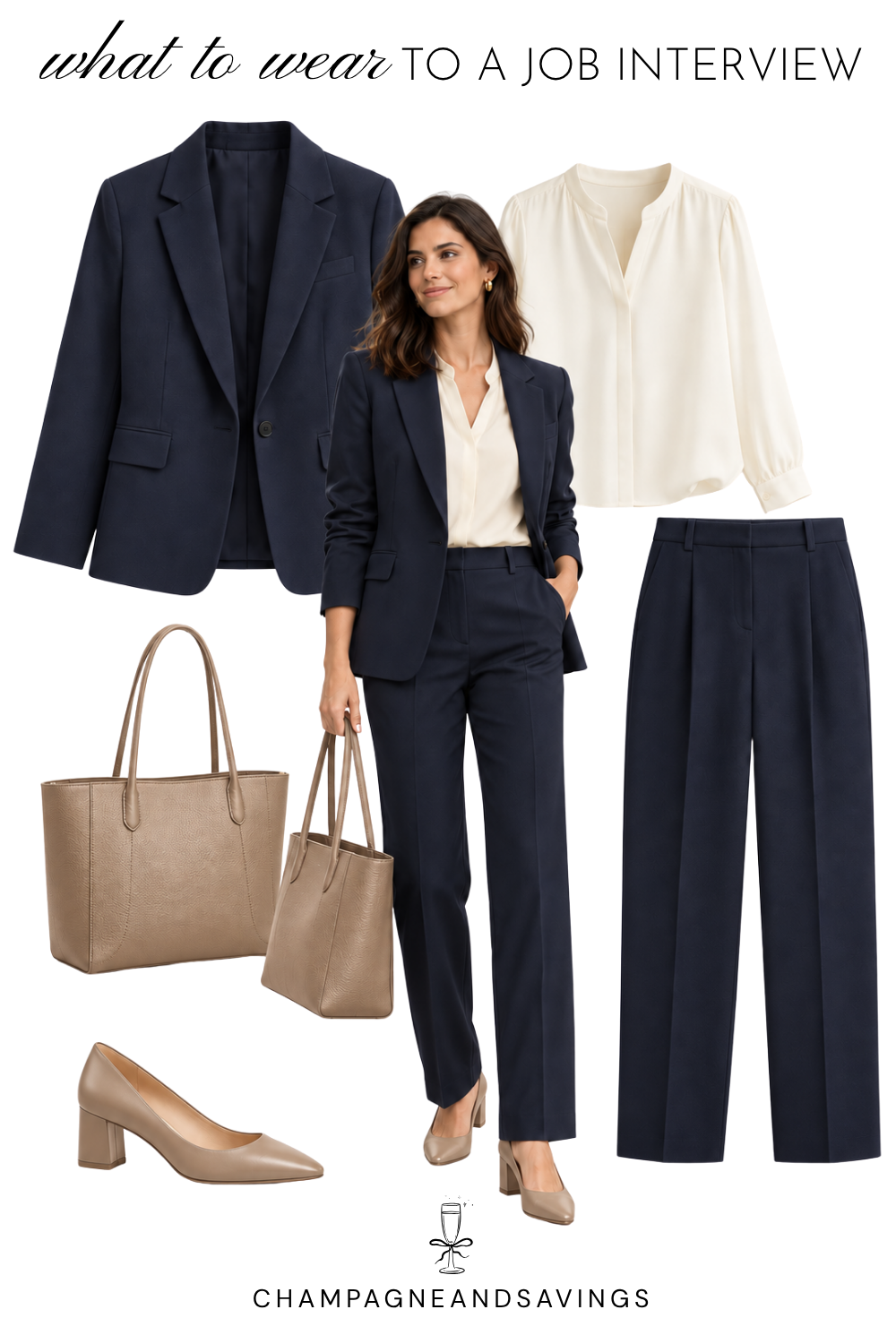
A navy suit is a reliable option when a more formal outfit makes sense. A cream blouse softens the combination, while taupe pumps and a neutral bag finish it without requiring navy accessories. Tuck in the blouse and check that the blazer feels comfortable when buttoned.
Best for: Formal interviews and traditional office settings.
Shop the look2. Chocolate brown pantsuit
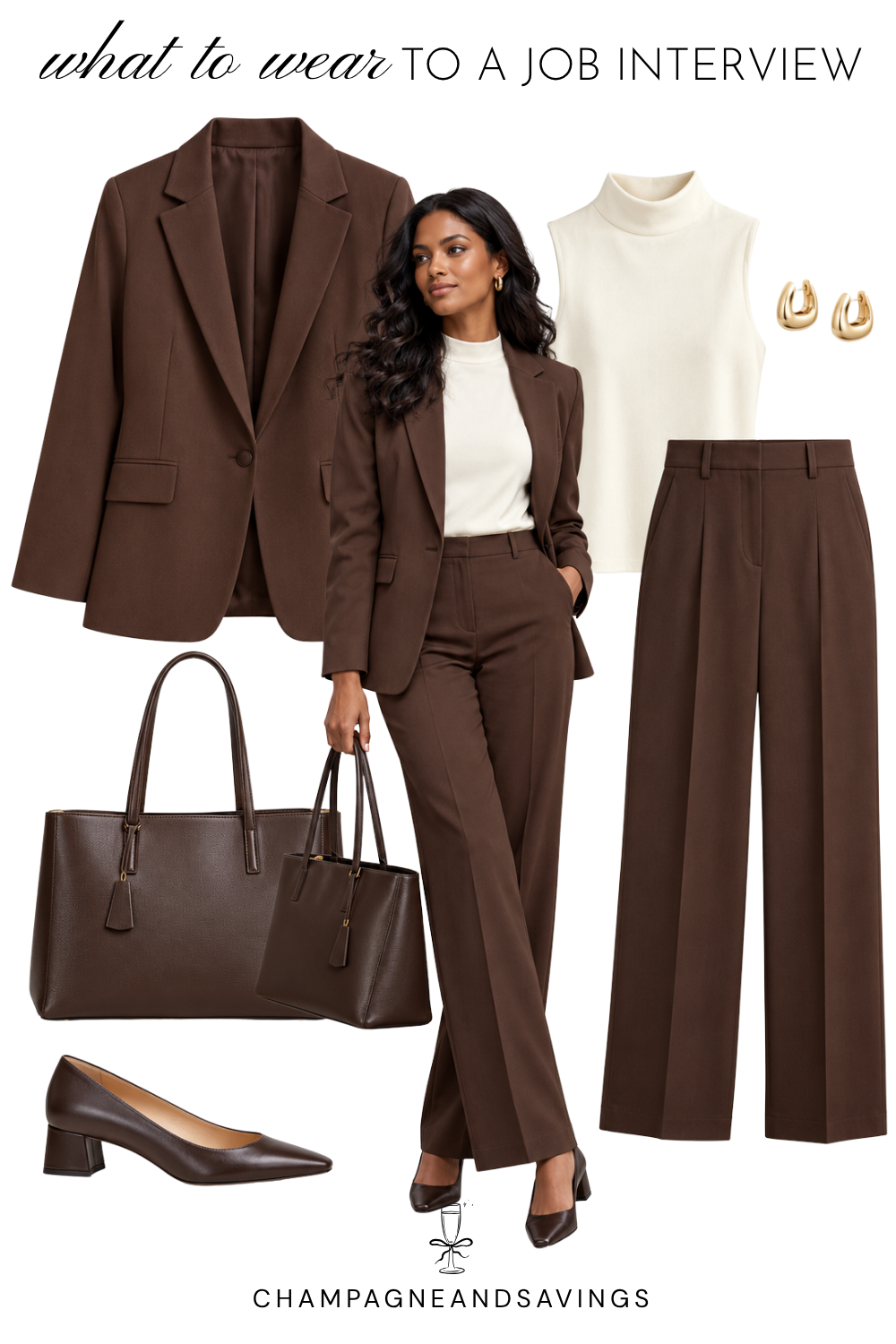
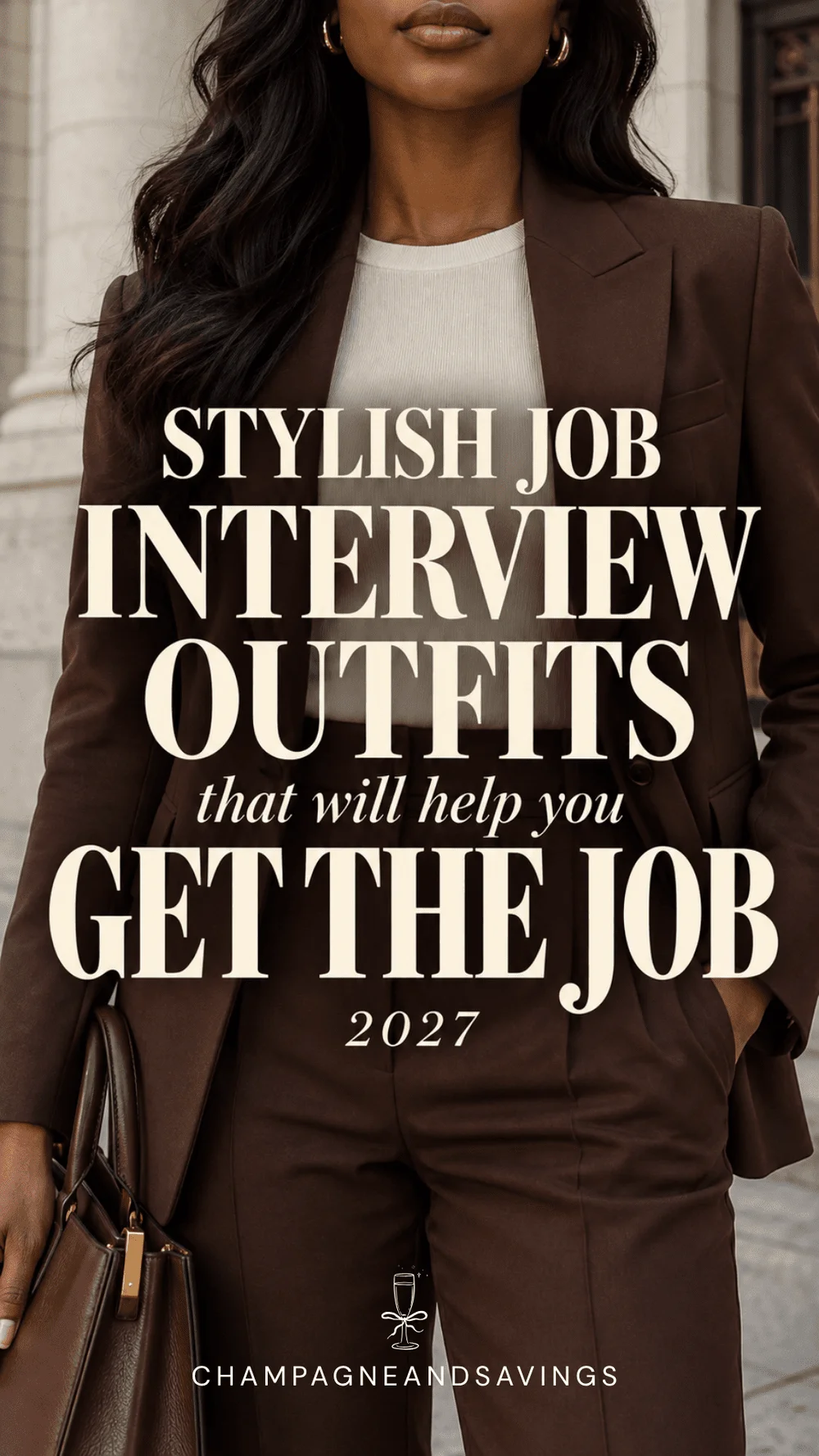
Chocolate brown gives a suit a different feel from the familiar black or navy options. Keep the layers simple with an ivory top, dark brown shoes and a structured bag. Check the trouser length in the shoes you plan to wear. If the hem drags, getting it adjusted may be more useful than spending more on accessories.
Best for: Formal interviews and traditional office settings.
Shop the lookRELATED: Effortlessly Chic Brown Pants Outfits You’ll Be Excited to Wear
3. Black midi dress with a matching blazer
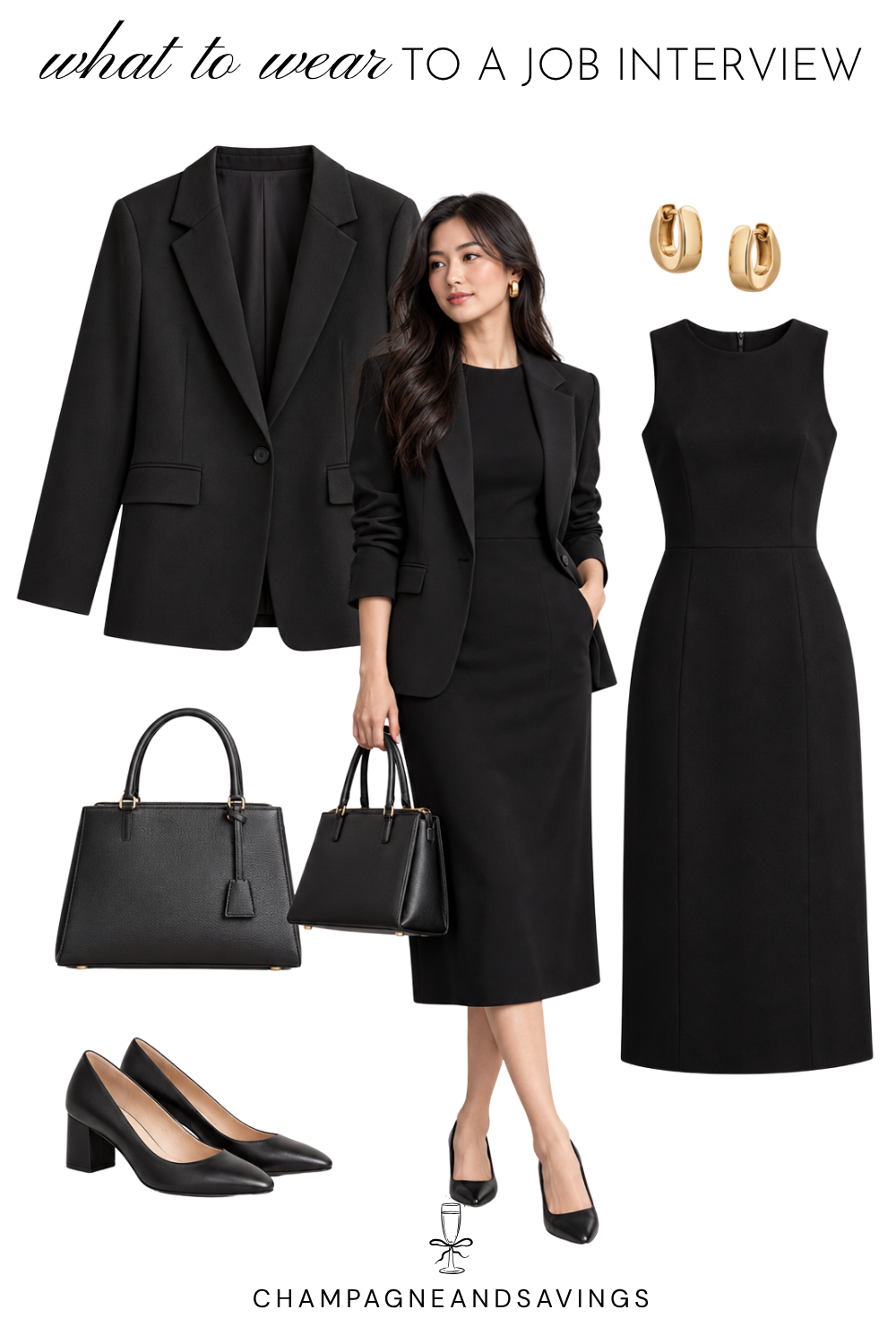
A simple dress and blazer make a complete outfit without the work of coordinating separate tops and trousers. Look for a higher neckline and a skirt that lets you sit and walk easily. Try the outfit sitting down before interview day; a dress can fit differently in a chair than it does while standing. Low pumps or dressy flats and a simple bag are easy finishing touches.
Best for: Formal interviews and traditional office settings.
Shop the lookRELATED: 8 Ways to Look Chic Styling A Blazer With A Dress
4. Gray pantsuit with a pale blue button-down
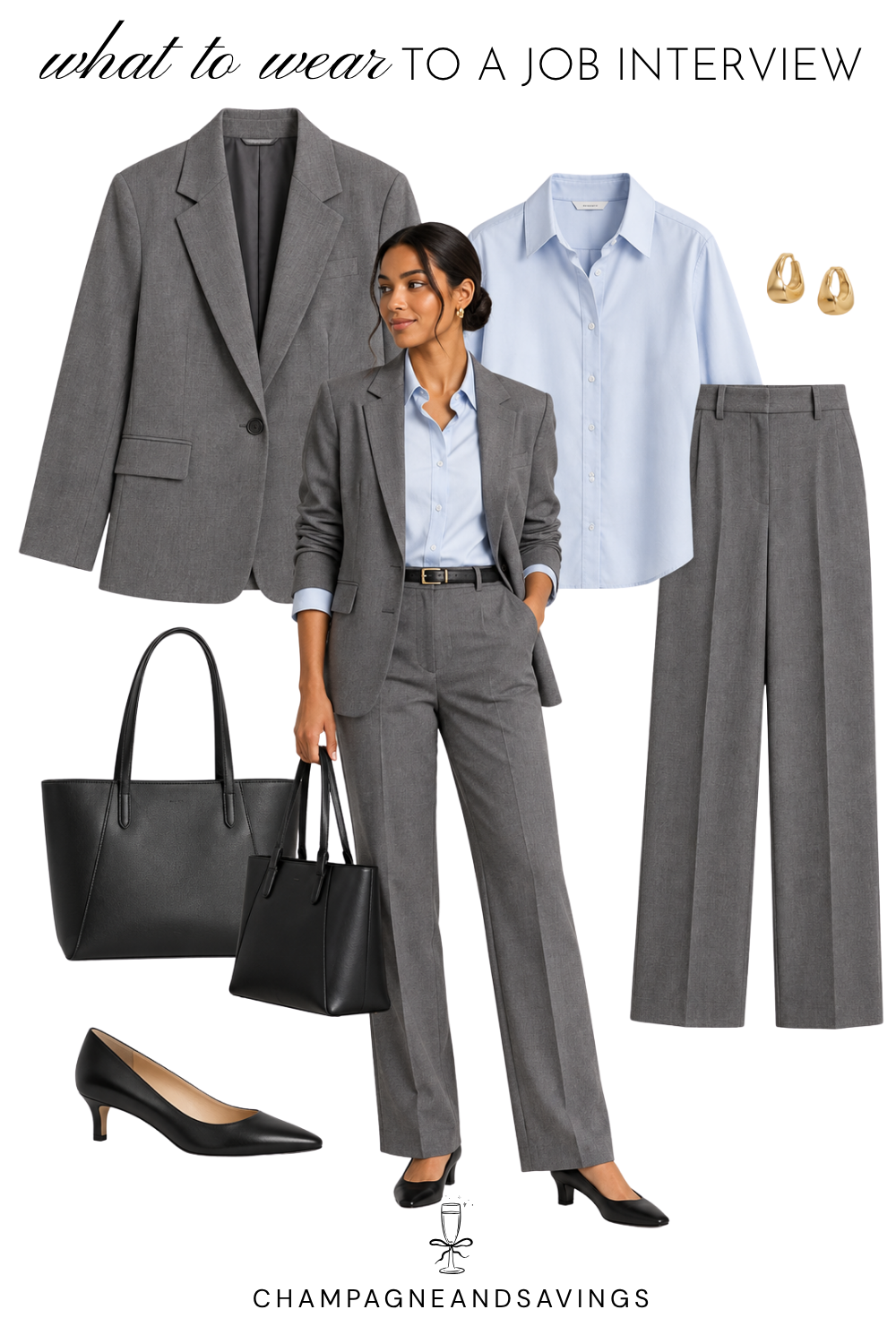
Gray and pale blue offer a little more color than a white shirt while keeping the outfit classic. Choose trousers with room to move and a button-down that stays comfortably closed across your chest. A slim belt and simple shoes are enough to finish the look. A shirt you need to keep checking can become an unnecessary distraction.
Best for: Formal interviews and traditional office settings.
Shop the lookRELATED: Classic Yet On-Trend Ways To Style a Button Down Shirt
5. Camel blazer with black trousers
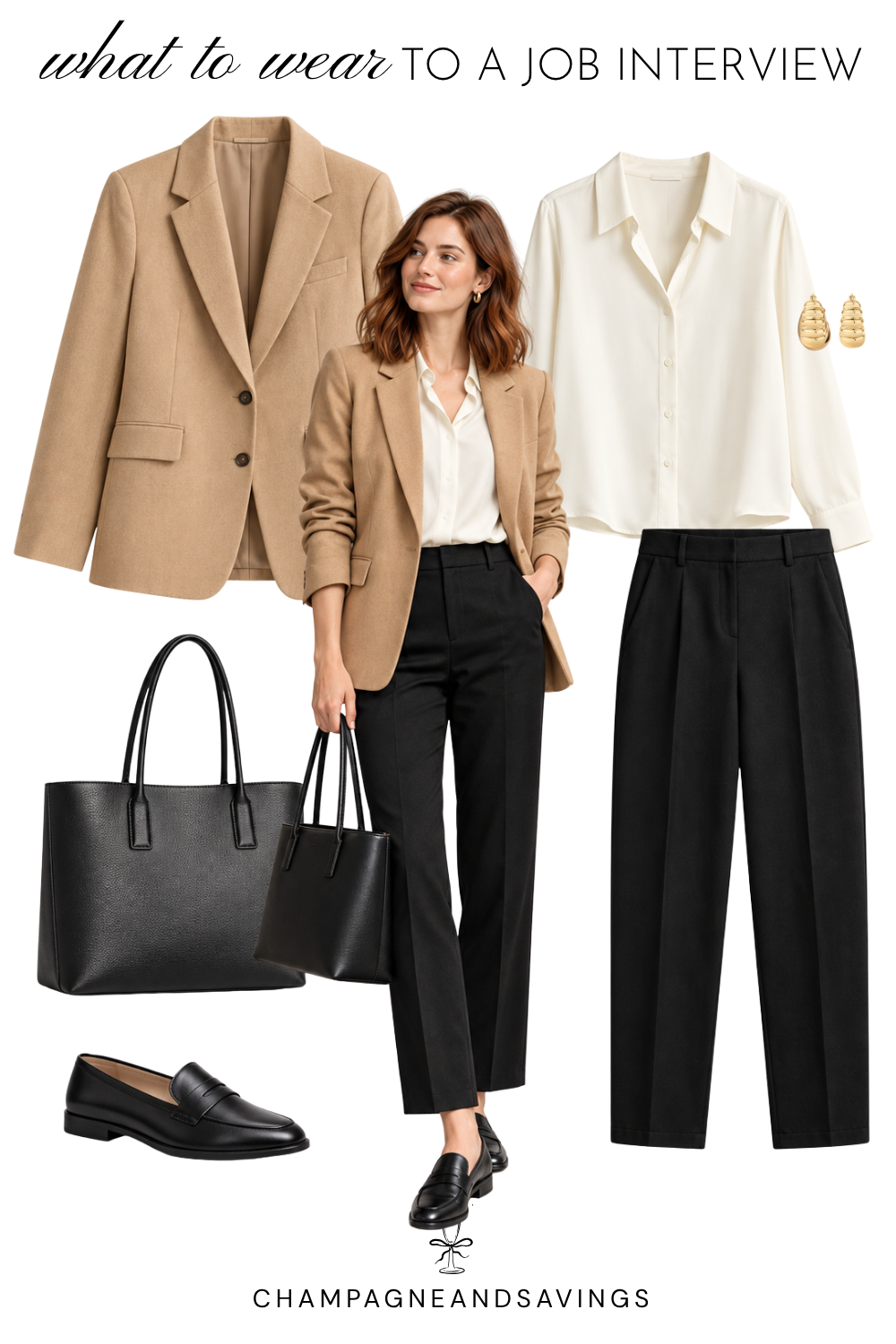
This combination can come together from pieces you may already own: black trousers, a cream blouse and a camel blazer. Black loafers make it easier to walk around an office, and each piece can work with other clothes after the interview. The blazer can also dress up a more relaxed outfit later.
Best for: Business-casual offices.
Shop the look6. Burgundy cardigan with gray trousers
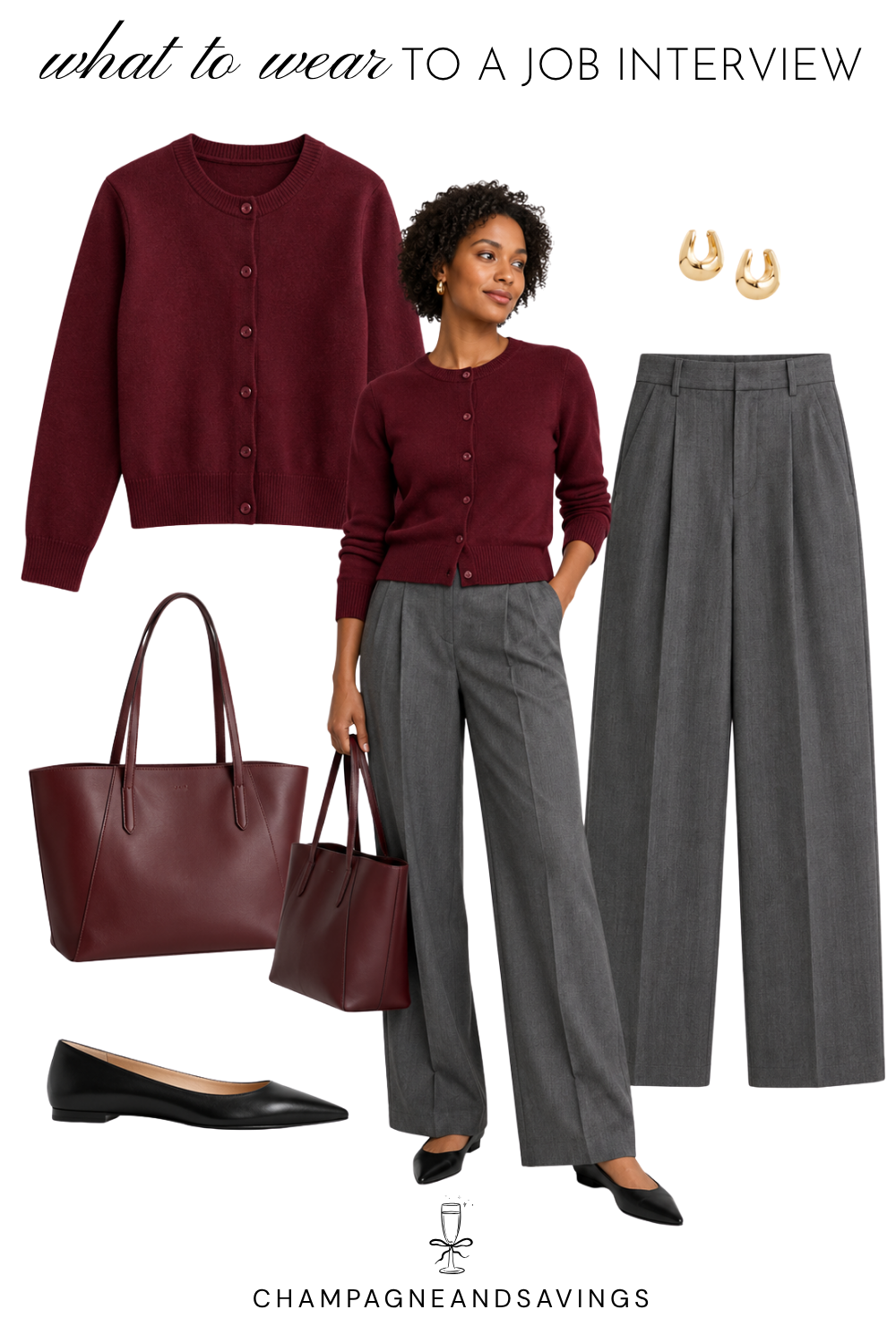
A burgundy cardigan adds color while keeping the outfit softer than a blazer and suit combination. Pair it with gray trousers and simple flats. If you plan to wear the cardigan as your top, make sure it buttons without pulling or leaving gaps. Check it in daylight and while seated; small earrings can finish the outfit without adding much fuss.
Best for: Business-casual interviews where a suit isn't expected.
Shop the lookRELATED: 22 Trendy Cardigan Outfits That Are In Style For 2027
7. Blue button-down with navy wide-leg trousers
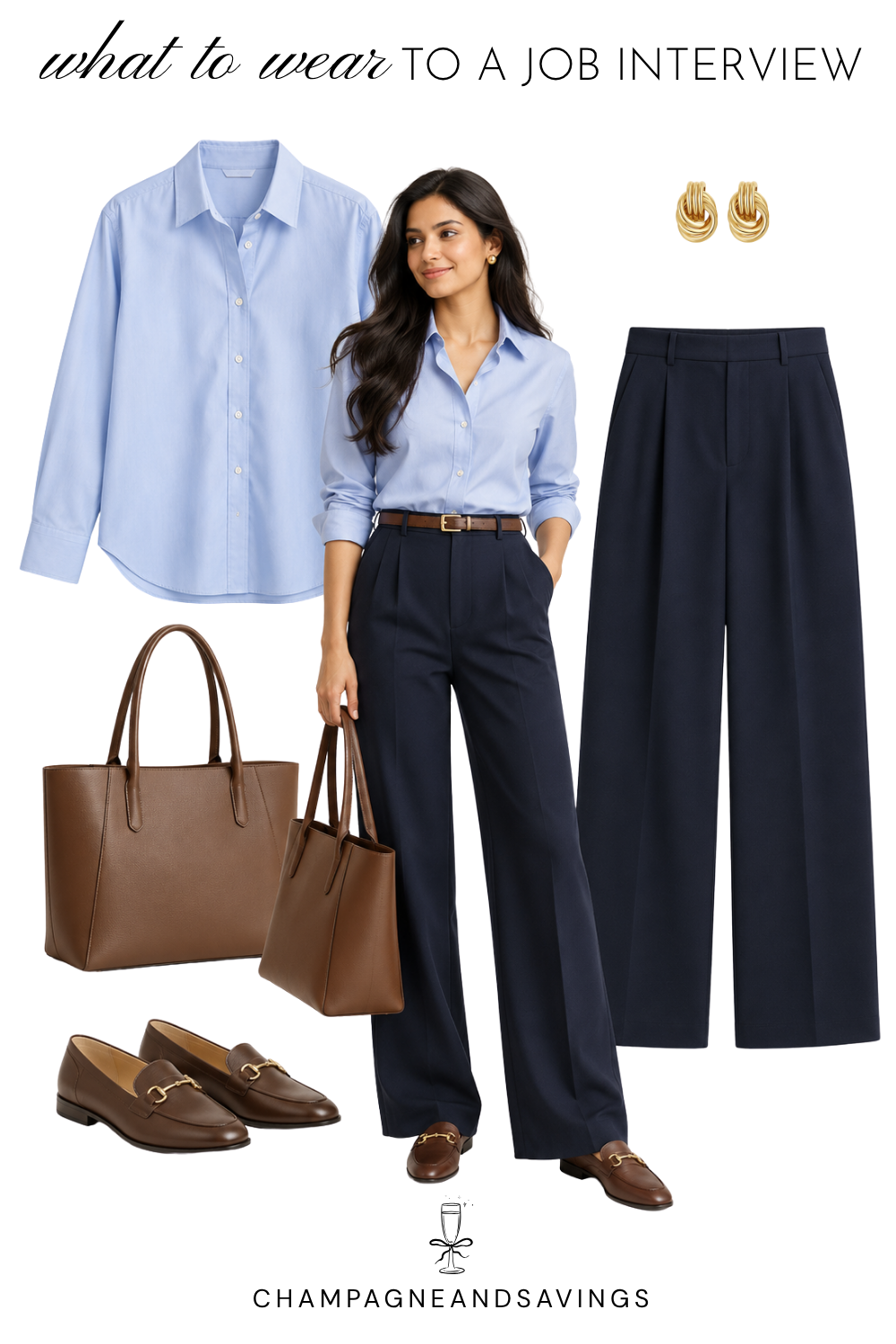
A tucked-in blue shirt and navy trousers make a neat outfit with just a few pieces. A brown belt and loafers add contrast. Choose a shirt with enough room to move, but avoid an oversized fit that bunches under the trousers. A quick steam can help the shirt look crisp.
Best for: Business-casual offices.
Shop the look8. Short structured jacket with straight-leg trousers
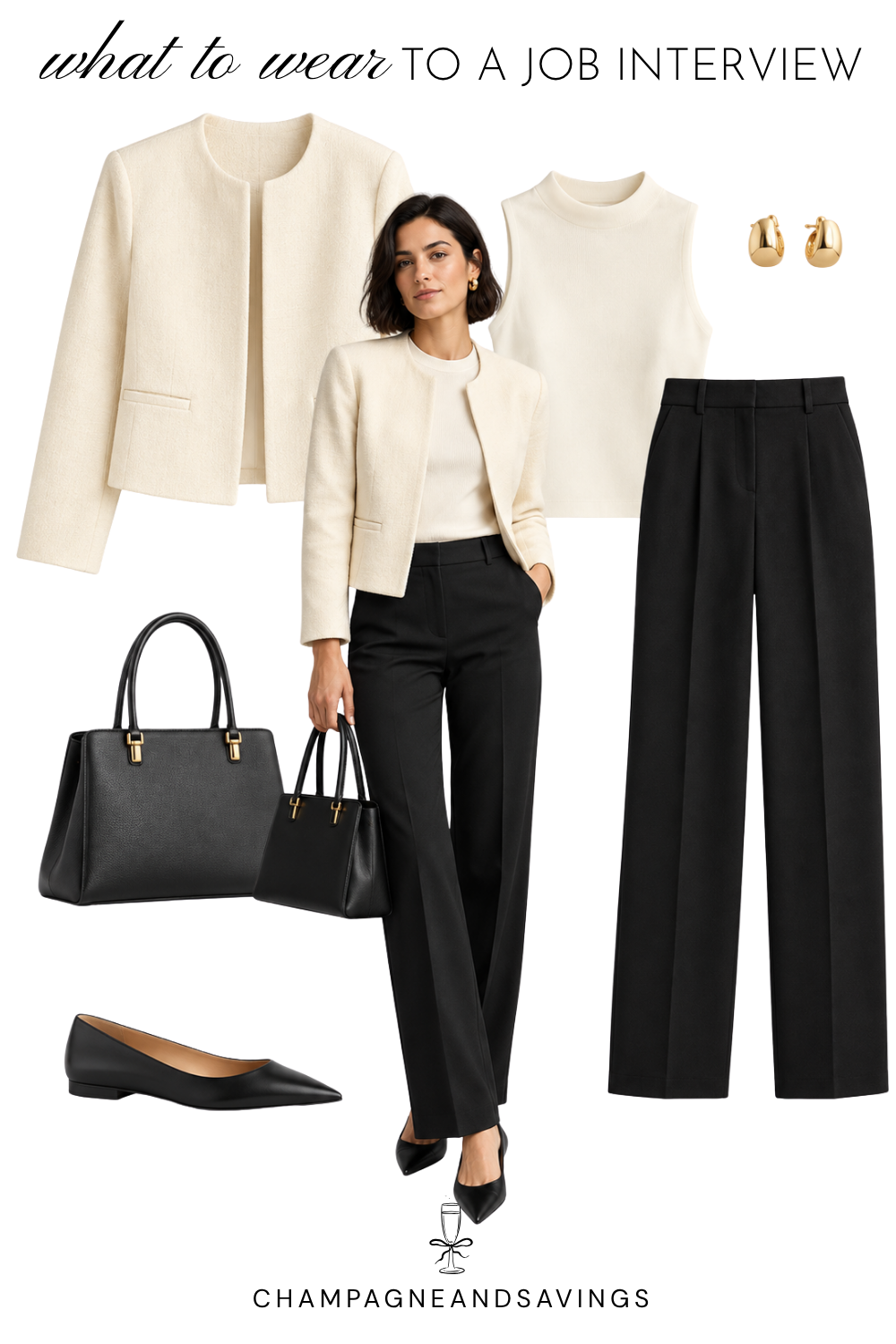
A cream collarless jacket is an alternative for someone who doesn't reach for a traditional blazer. Wear it over a plain top with black straight-leg trousers. Its shorter length leaves the trouser waist visible, so pointed flats and a simple bag are all the outfit needs.
Best for: Business-casual or creative office interviews.
Shop the lookRELATED: How to Style Trousers: 17 Trendy Outfit Ideas
9. Lightweight sweater with a midi pencil skirt
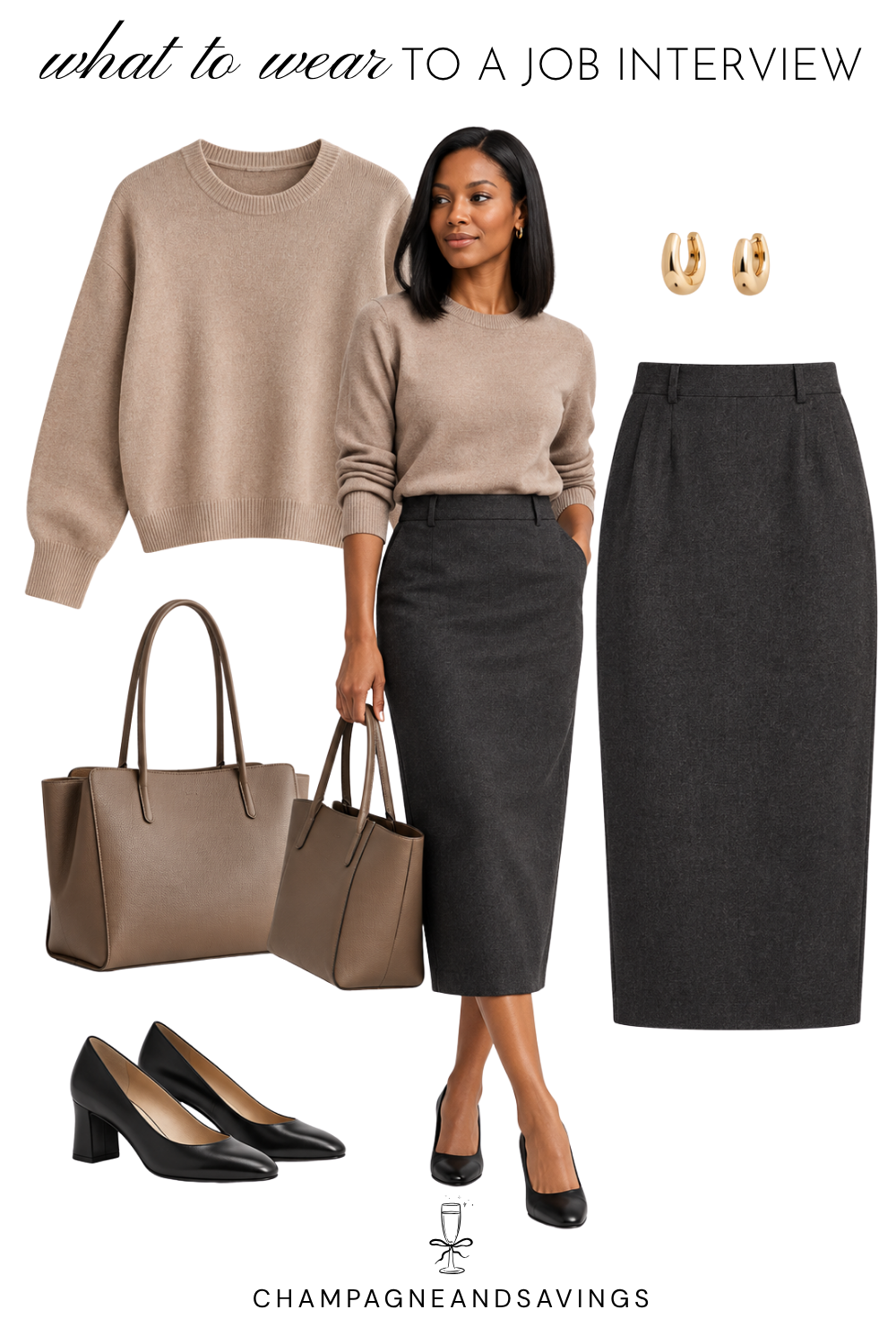
A taupe sweater tucked into a charcoal midi pencil skirt gives you a skirt outfit without a matching suit. Make sure the skirt allows a comfortable stride and lets you sit easily. A lightweight sweater will tuck in more neatly than a bulky one. Finish with low pumps and small earrings.
Best for: Business-casual interviews.
Shop the look10. Sweater vest over a white button-down
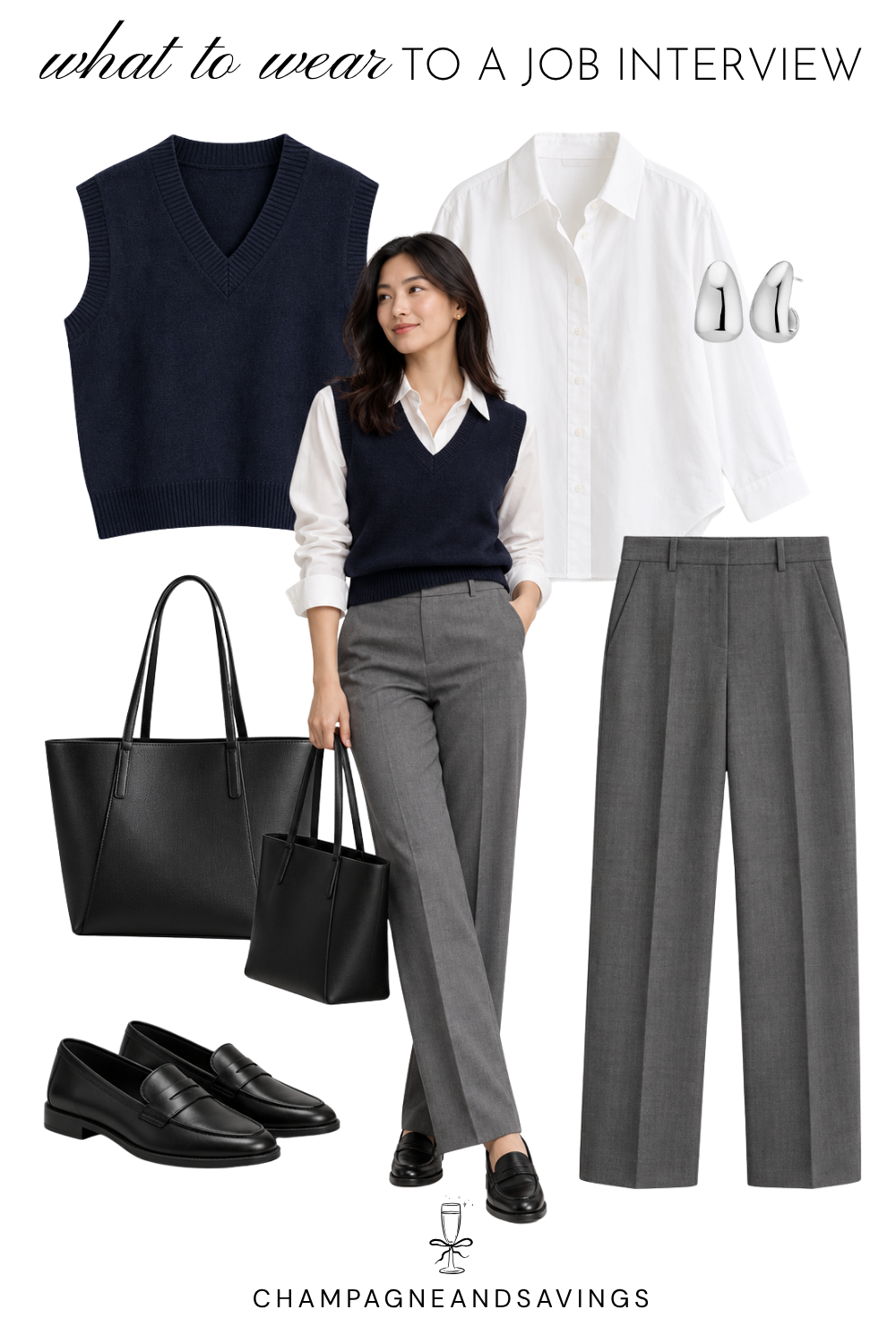
A navy sweater vest, white button-down and gray trousers make a polished, slightly preppy combination. Keep the shirt layers smooth so they don't puff out under the vest. Try everything on in advance to check that the collar and sleeves stay in place. Simple loafers complete the outfit.
Best for: Business-casual offices.
Shop the look11. Black turtleneck with gray wide-leg trousers
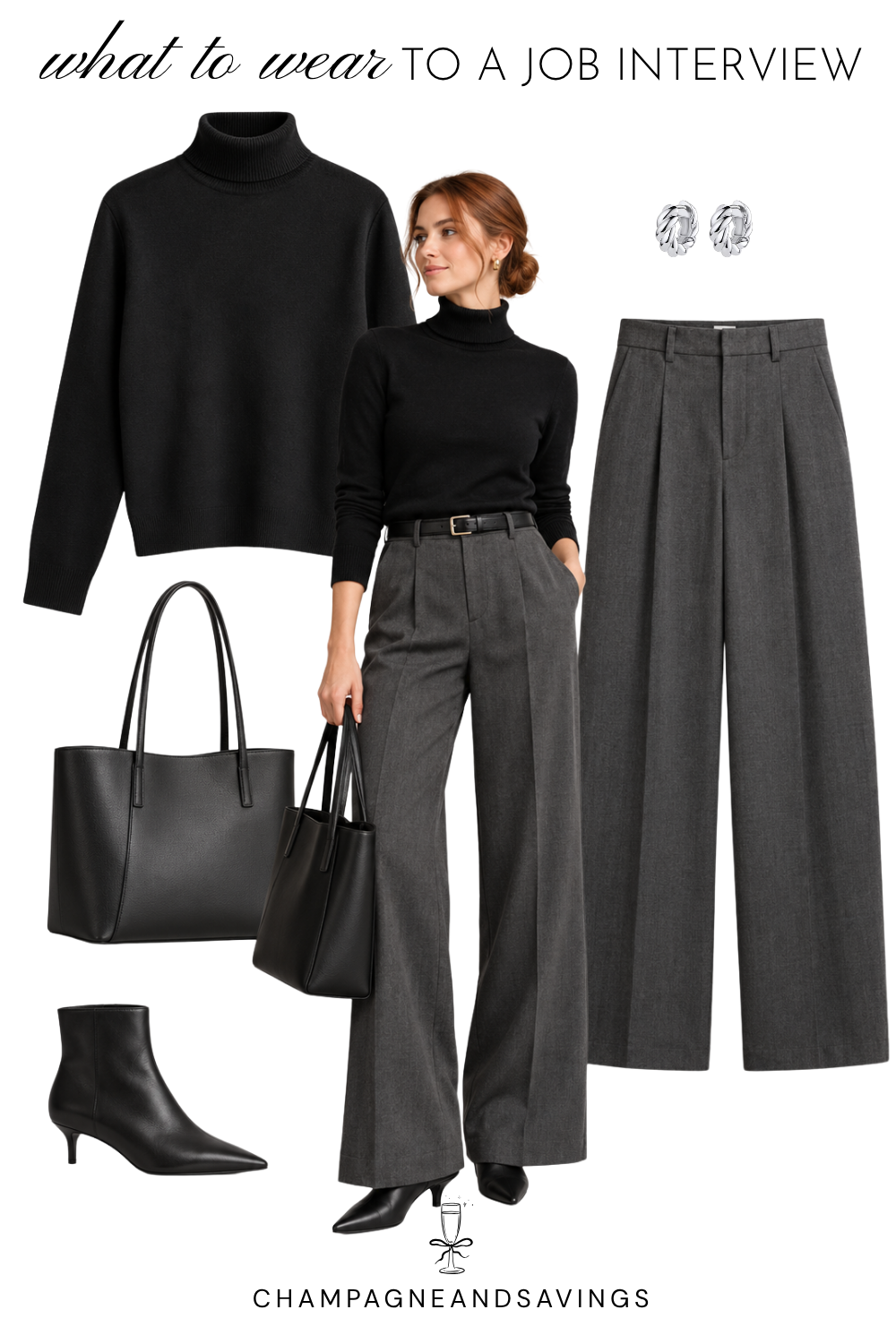
For a cold-weather interview, a black turtleneck and gray trousers work well together, with a coat for the journey there. Pointed ankle boots, a slim belt and small earrings keep the details simple. Check that the trouser legs fall comfortably over the boots. If the workplace is more formal, add a blazer.
Best for: Cold-weather business-casual interviews.
Shop the look12. Shirt dress with closed-toe flats
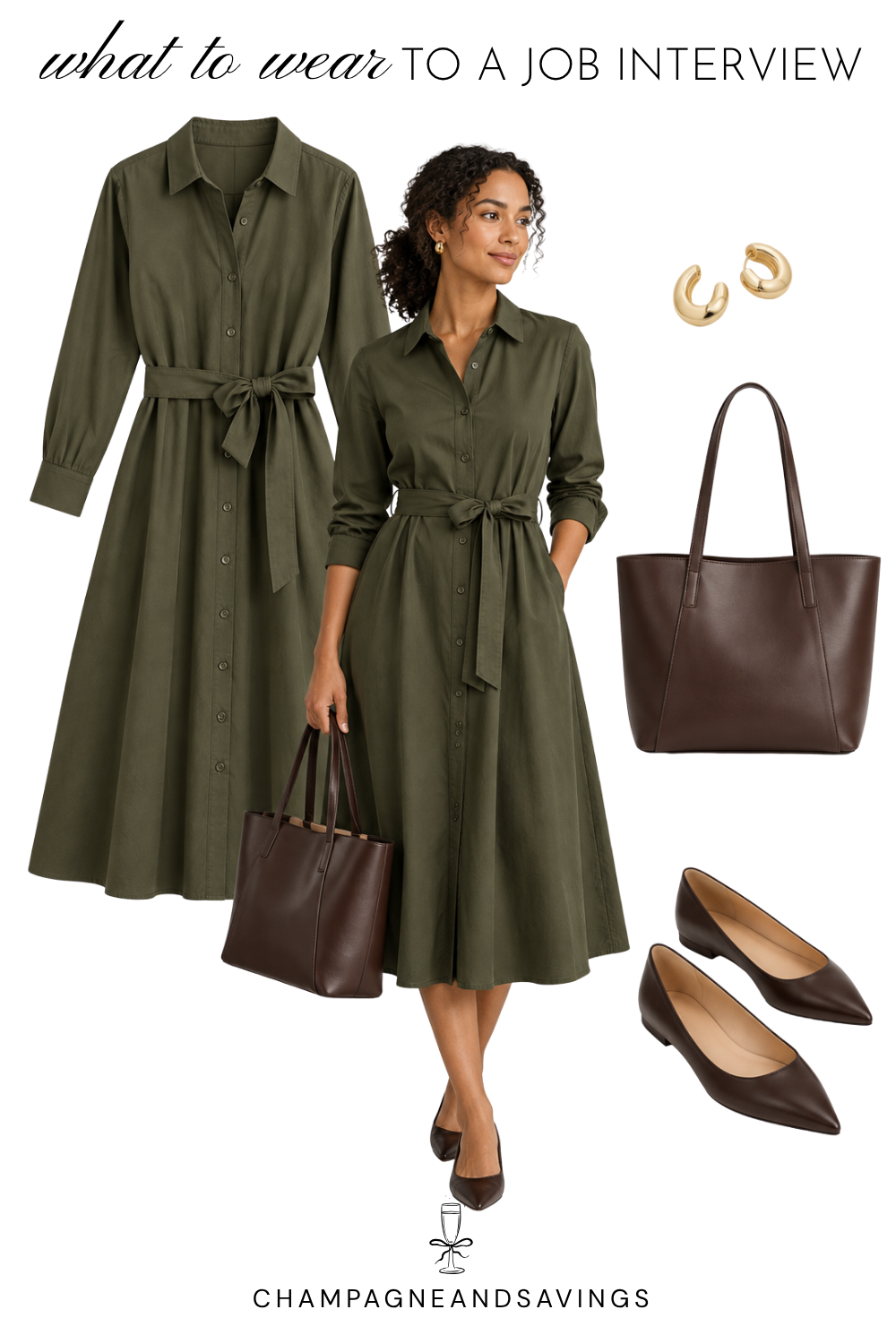
A solid-color shirt dress with a defined waist and midi hem offers a one-piece option when a suit feels too formal. Sit and move in it to check that the buttons stay closed. Closed-toe flats and a structured bag keep the outfit practical. Brown accessories pair nicely with an olive dress.
Best for: Business-casual interviews.
Shop the look13. Matching midi skirt suit
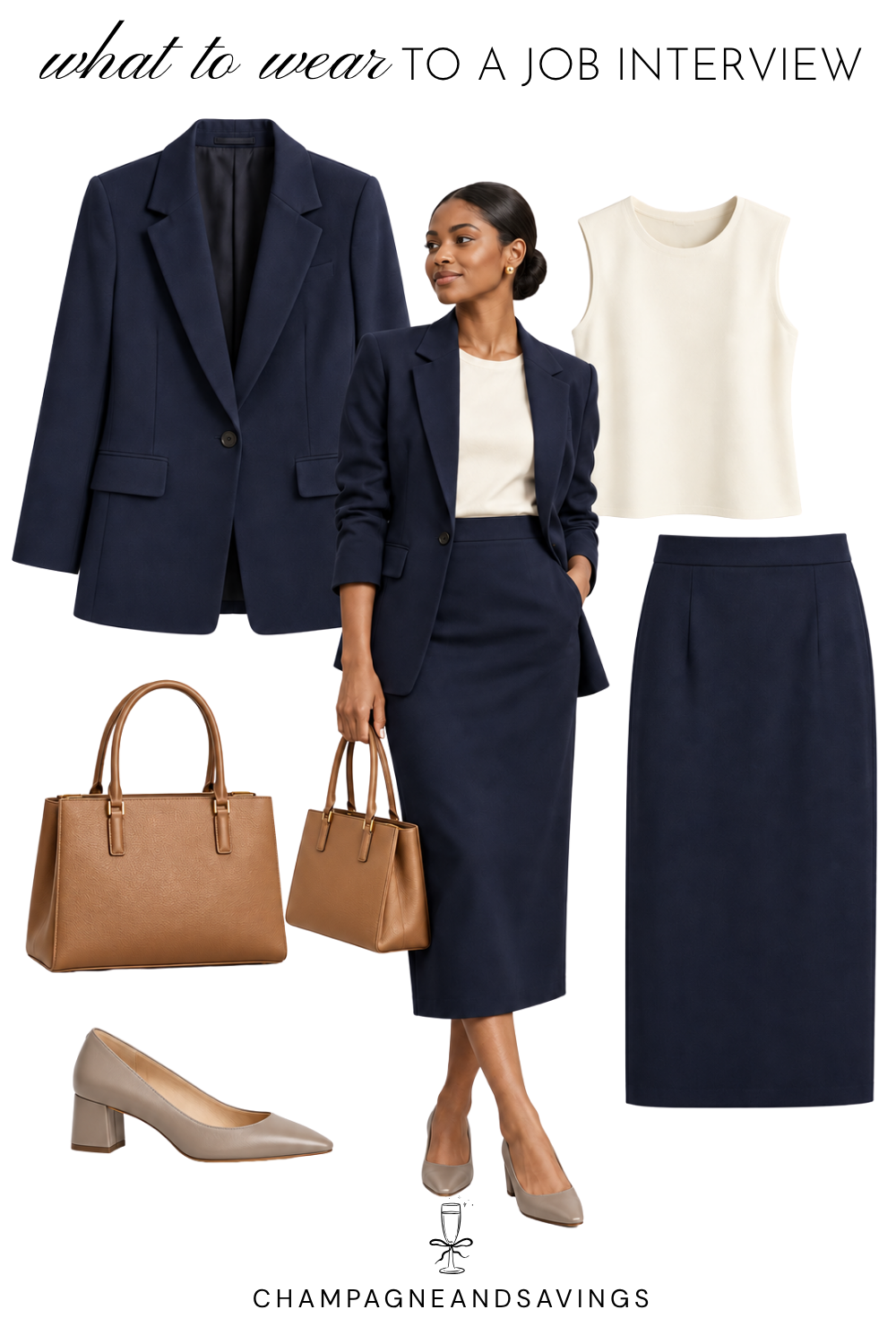
A skirt suit is another formal option, particularly if you feel more comfortable in a skirt than trousers. A longer blazer can give the outfit a current feel. Try a cream top with navy suiting, then add a camel bag and taupe pumps. The accessories can coordinate without matching exactly. Check the skirt length seated and make sure the jacket lets you move easily.
Best for: Formal interviews and traditional office settings.
Shop the look14. Cream blazer with chocolate trousers
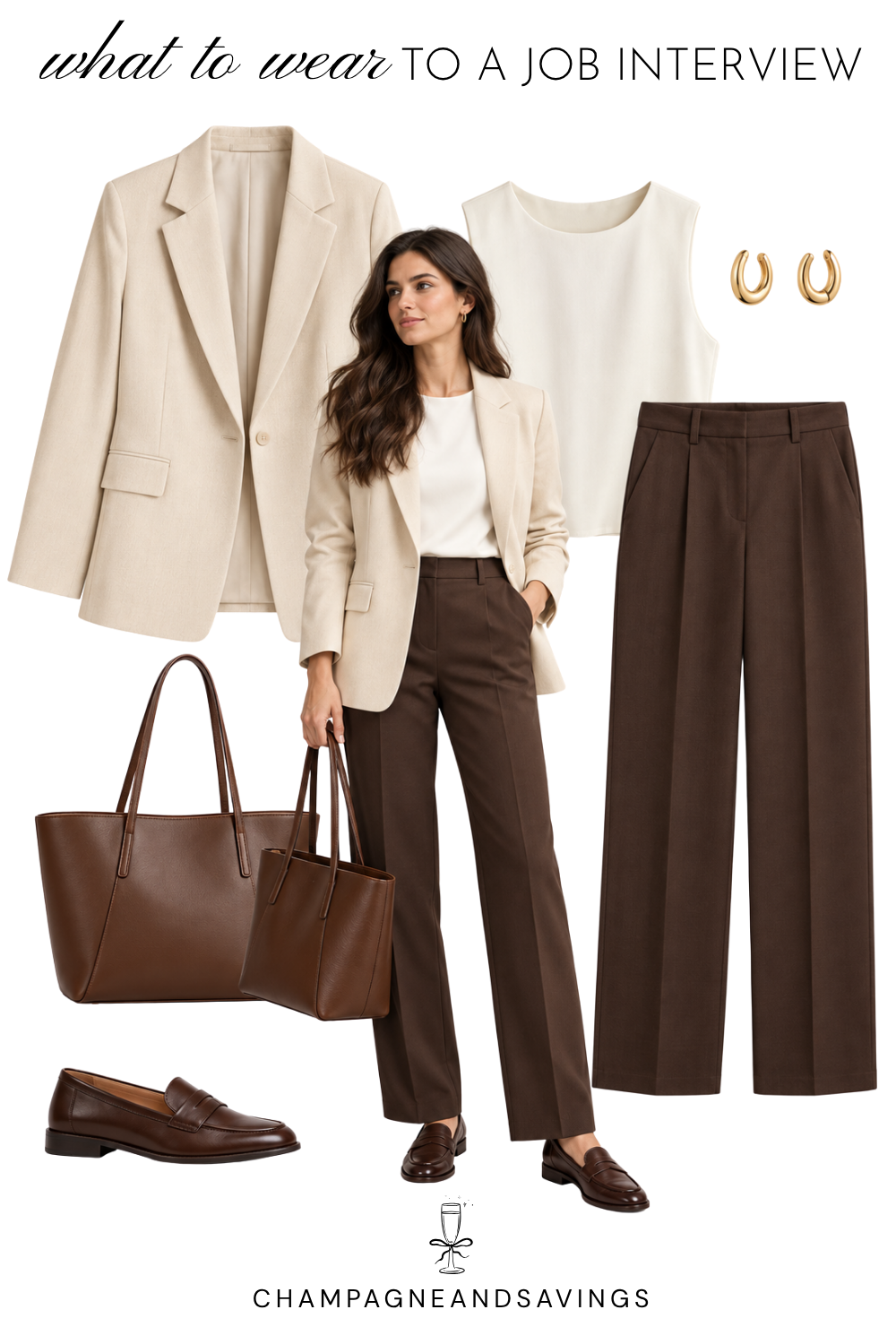
Cream and chocolate brown make an easy pairing when you want a blazer without a matching suit. Keep the top simple, add brown loafers and carry a structured bag for interview materials. Check lighter clothes in daylight before leaving so you can spot any marks or see-through fabric.
Best for: Business-casual or creative offices.
Shop the look15. Navy cardigan with a subtle plaid midi skirt
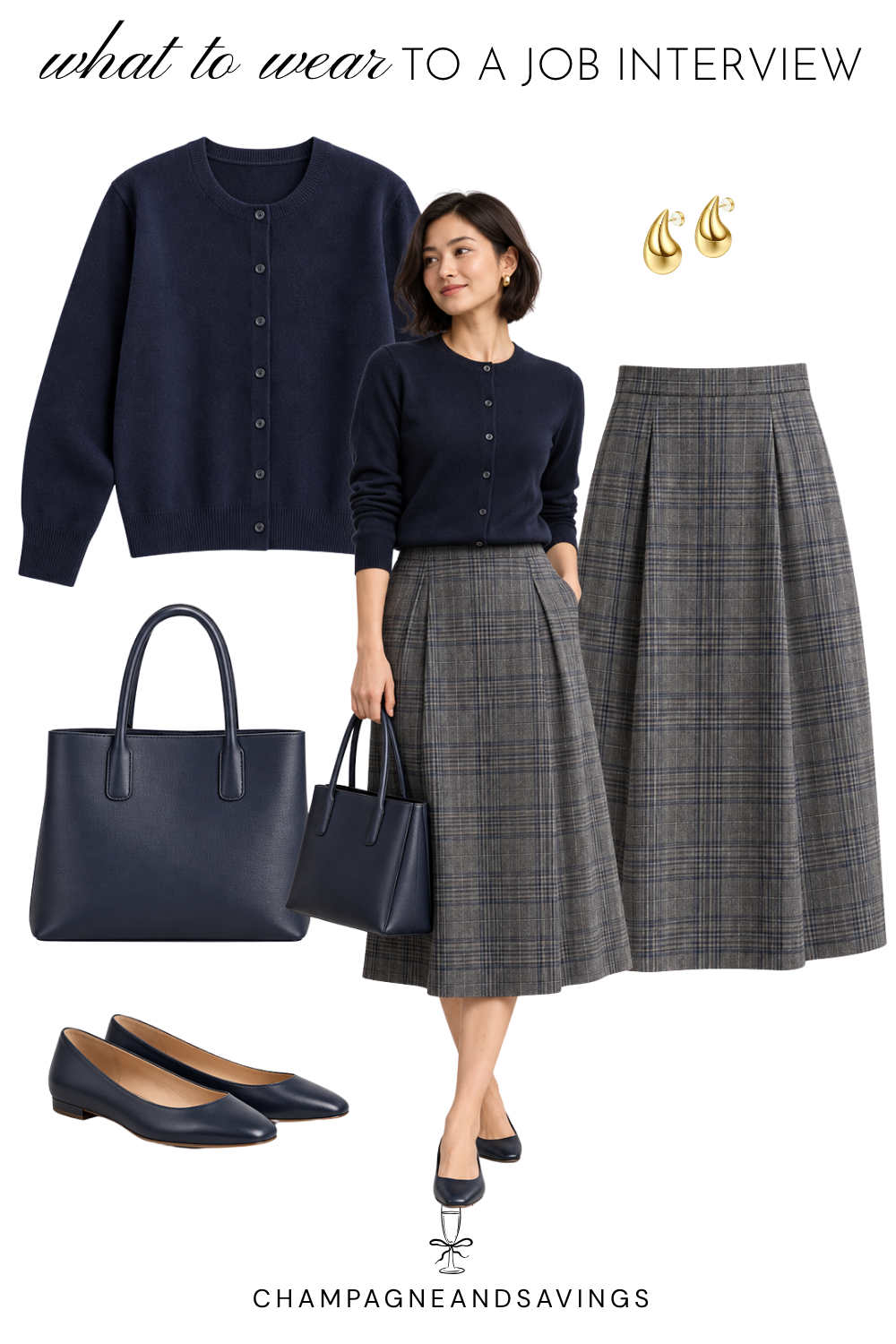
A navy cardigan balances a subtle plaid skirt, giving the outfit a classic, slightly preppy feel. Choose a straight or gently A-line skirt and keep the jewelry and shoes simple. An understated print adds interest without making the outfit feel busy.
Best for: Business-casual or creative offices.
Shop the lookKeep hair and beauty choices familiar
Wear your hair in a style you already know works for you. A low ponytail, bun, half-up style or loose hair can all be suitable. Curls, coils, braids, locs and protective styles are professional choices, too. The practical question is whether you'll feel comfortable and avoid moving your hair away from your face throughout the conversation. If you know the front pieces tend to fall forward, pin them back or choose a style that keeps them out of your eyes.
You don't need a salon appointment. Leave enough time to follow your usual routine without rushing, and avoid trying an unfamiliar style on the morning of the interview.
Nails: Clean, neat nails are enough; bare nails are fine. If you like polish, sheer pink, beige or a simple French manicure are understated options. Remove chipped polish, and consider whether very long nails or detailed decorations might get in your way or draw your attention.
Makeup: Wear what feels comfortable, or wear none. If makeup is part of your routine, stick with a familiar look and products you know how to wear. A new foundation or lipstick that needs repeated checking may give you one more thing to think about.
Perfume: Consider skipping fragrance. You may sit close to the interviewer in a small room, and you don't know their preferences. Leaving it out is an easy way to avoid that uncertainty.
You can look prepared without turning interview morning into a full beauty appointment. Familiar choices are often easier to manage when you already have other things on your mind.
Shop for the missing pieces
Before buying anything, check your closet. You may only need a blouse, trousers with a better fit or shoes you can comfortably walk in. If you do shop, focus on the pieces you need rather than buying a complete outfit just because it appears together online. Separates you can wear again may be more useful than a one-purpose purchase.
Ann Taylor: For a traditional interview suit. Start with matching separates if you need a coordinated outfit, then look for a simple top to wear underneath.
Banana Republic Factory: For several workwear pieces. Compare blazers and matching trousers in neutral colors that can also be worn separately after the interview.
Abercrombie: For trousers you can wear again. The Sloane tailored pants may suit someone who likes a wider leg. Try them on with the shoes planned for the interview to check the length.
Old Navy: For a smaller clothing budget. The wear-to-work trousers, including Pixie styles, are a place to look if pants are the main gap in your closet. Try them with a blouse or cardigan you already own before adding more items.
Quince: For straightforward tops and layers. Browse for a blouse, lightweight sweater or blazer in a color that works with your existing trousers and shoes.
J.Crew: For classic suiting. Compare matching separates if you want pieces that can also work for meetings and office days. Choose the cut that suits your fit preferences rather than expecting it to look exactly like it does on a model.
Aritzia: For a trouser-first outfit. The Effortless Pant may appeal if you like a wider leg and expect to wear it often. Get the trouser fit right, then build around it with a simple top and jacket.
Before ordering, check the item's measurements, care instructions and return terms. Leave time to try everything on and arrange alterations if needed. An outfit that arrives the night before leaves little time to adjust the fit.
Try the whole outfit before interview day
Put on the complete outfit, including your shoes and the layers you plan to wear underneath. Sit down, walk around, reach for your bag and raise your arms. Look for buttons that pull, visible underwear, hems that ride up or trousers that drag. Check that you can move normally and that the shoes stay comfortable after more than a few steps. Heels aren't required for a professional look.
Steam clothes that need it, remove lint and wipe your shoes. Pack your bag the night before and make sure any requested materials are easy to find. These small checks can help you avoid an uncomfortable surprise just before the meeting.
For a video interview, test the outfit on camera using the lighting you'll have during the call. Get fully dressed so you won't have to worry if you stand up. Check that your neckline and any pattern look the way you expect on screen.
Once your clothes are sorted, turn your attention to preparing your answers. An outfit can help you feel put together when you arrive; your experience, preparation and fit for the work are what you want the interviewer to remember.