Rebuilding Credit After a Consumer Proposal or Bankruptcy in Canada
Debt relief affects your credit, but you can rebuild before the filing leaves your report. Learn the timelines, borrowing trade-offs and practical steps.
A consumer proposal or bankruptcy can make borrowing harder, but it doesn’t shut off access to credit forever. In Canada, many people start rebuilding while the filing still appears on their credit report. The more useful question is how to rebuild without taking on new debt that recreates the pressure that led to debt relief.
Both options affect your credit profile significantly. Before deciding, it helps to understand how accounts are rated, how long the filing may remain visible, and what habits can add positive payment history over time. The reporting timelines vary by credit bureau and, for bankruptcy, can also depend on your province.
What a credit rating tells lenders
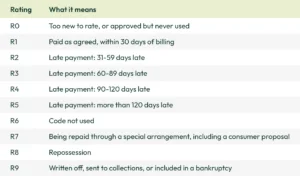
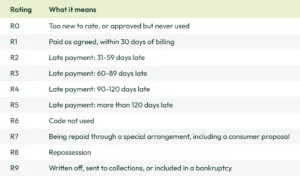
Canadian credit reports can show both a three-digit credit score and a rating for each account. The letter identifies the type of account: R is revolving credit, such as a credit card or line of credit; I is an instalment loan, such as a car or personal loan; and O is an open account, such as a cellphone plan. The number beside the letter describes how that particular account is being paid.
Most consumer debt is revolving, so people often focus on their R rating. Accounts included in a consumer proposal are generally rated R7, indicating that repayment is being handled through a formal arrangement. In bankruptcy, accounts are generally rated R9, the bottom of the scale.
These ratings apply account by account. If five credit cards are included in a proposal, each can receive an R7. A new account opened after the proposal keeps its own rating. The account rating is also separate from your credit score; lenders may consider both, along with income and current financial obligations.
Neither rating lasts forever. Accounts can be updated as they’re resolved, and the insolvency record eventually comes off the report. The R7 and R9 labels are serious marks, but they don’t tell the whole story of a borrower’s finances or what their more recent payment history looks like.
Credit may already be under pressure before you file
By the time someone seeks help from a Licensed Insolvency Trustee, the credit report may already show missed payments, cards near their limits, collections, high credit use or several outstanding loans. Some people have spent months paying minimums while their balances barely shrink. Those patterns can lower a score and affect account ratings before a consumer proposal or bankruptcy begins.
That matters when weighing the effect of filing. Some borrowers expect debt relief to cause all the damage to their credit, when part of it may already be recorded. For example, an account sent to collections may already carry an R9 rating before a filing.
Continuing minimum payments can feel like a way to protect a credit score. But if the debt remains unmanageable and the balances barely move, those payments may not be improving the credit picture. The decision deserves a look at the full situation: what the debts cost, whether repayment is realistic, and what each available debt solution would mean.

How long a consumer proposal stays on a report
The removal date depends on the credit bureau and how quickly you complete the proposal. Equifax removes a consumer proposal three years after all included debts are paid, or six years from the filing date, whichever comes first.
TransUnion removes the proposal, along with each account reported as satisfied through it, three years after the proposal is satisfied or six years after the account defaulted, whichever comes first. The six-year measure differs: Equifax counts from the filing date, while TransUnion counts from the account’s default date. Since people often stop paying before they file, those dates may not match, and the two reports may clear at different times.
The Financial Consumer Agency of Canada describes the general timeline as three years after the proposal is paid or six years after it’s signed, whichever comes first. The specific bureau rules above explain why the dates can vary between reports.
Completion time can affect the timeline
Consider a proposal filed in January 2027. Under Equifax’s rule, paying it off early can bring forward the date when it disappears. If the proposal is completed in less than three years, the three-year period after payment may end before the six-year mark from filing. If repayment takes longer, the six-year backstop may arrive first. A proposal can run for up to five years, so someone who takes the full term may reach that backstop before three years have passed since completion.
This makes early completion relevant to the reporting period, but only up to a point. If your circumstances improve, putting a lump sum toward the proposal, such as money from a tax refund, bonus or higher income, may shorten the time until completion. Whether that makes sense depends on your finances and proposal terms; a Licensed Insolvency Trustee can explain what paying ahead would mean in your case.
Once you complete the proposal, you receive a Certificate of Full Performance as proof. After allowing time for the reports to update, check both Equifax and TransUnion. Confirm that the proposal is marked complete and that the included accounts are reported accurately. TransUnion removes the proposal and accounts reported as satisfied through it together.
How long bankruptcy stays on a report
For bankruptcy, the reporting period depends on the bureau, whether you’ve been discharged and, at TransUnion, where you live. A discharge is the point at which you’re released from the obligation to repay debts included in the bankruptcy.
Equifax removes a first bankruptcy six years after the discharge date. If no discharge date is reported, Equifax removes it seven years after the filing date. TransUnion keeps the record for the period allowed under the credit reporting rules in your province, so the timeline varies by location.

A second bankruptcy can stay on a report for 14 years. TransUnion counts 14 years from the discharge date of each bankruptcy. Equifax shows the first bankruptcy again alongside the second, and both remain for 14 years after their respective discharge dates.
Because the usual clock starts at discharge, completing the required process matters. An undischarged bankruptcy has no discharge date for the ordinary six-year Equifax period to run from; the seven-year rule applies when a discharge date hasn’t been reported.
These are timelines for how long the insolvency information remains visible. They don’t mean you must wait until it disappears to begin rebuilding. Newer account activity can add to your credit history during the reporting period.
Getting credit during a proposal or bankruptcy
Some people can access credit while completing a consumer proposal. Credit cards with balances are generally cancelled by the issuer when the proposal is filed. The Office of the Superintendent of Bankruptcy says a card with no balance at filing may be kept, and that a secured card or a card with a small limit may be available during the proposal.
Credit during bankruptcy is possible too, though many people should expect it to be difficult. You’re required to give your Licensed Insolvency Trustee the credit cards in your possession or control so they can be cancelled. The Office of the Superintendent of Bankruptcy identifies secured cards and cards with small limits as possible options in some cases.
In either situation, lenders set their own approval criteria, and approval isn’t assured. Borrowing costs may also be higher because the lender sees more risk. An offer doesn’t have to be accepted: if debt payments had become unmanageable, replacing old balances with expensive new borrowing could undermine the reason for pursuing debt relief.
Build a new payment record carefully
There’s no quick reset for a credit score. Rebuilding happens through repeated, manageable payments and accurate reporting. These steps can help create a steadier record without making credit the only measure of financial progress.
1. Review both credit reports
Equifax and TransUnion may not hold identical information, so check each report. Look for incorrect balances, accounts that should show as included in the proposal or bankruptcy, payment errors, accounts you don’t recognize, and outdated addresses or employers. Contact the bureau to ask for an investigation if you find an error.

2. Pay ongoing bills on time
Keep any new credit payments current, and stay on top of regular expenses such as rent or mortgage payments, utilities, phone service and insurance. This helps prevent fresh problems while you deal with past debt. If due dates are easy to miss, use automatic payments or phone reminders.
3. Consider a secured card
A secured credit card requires a deposit, which commonly sets the card’s limit. For example, a $500 deposit may provide a $500 limit. You use the card for purchases and must pay the bill; the deposit protects the issuer if you don’t.
The Financial Consumer Agency of Canada lists secured cards as an option for people who have filed for bankruptcy or are rebuilding damaged credit. Since the issuer holds a deposit, approval may be more attainable than for a traditional card. Each issuer still sets its own criteria, so it isn’t automatic.
A secured card can add positive history if the issuer reports account activity to Equifax and TransUnion. Each on-time payment can become a new entry; over a year, that could mean 12 months of reported payments. A well-managed card may carry an R1 rating alongside older accounts rated R7 or R9. It doesn’t erase the older information, but it adds a record of more recent behavior.
Check that the issuer reports to both bureaus, and pay the bill on time every month. If the account isn’t reported, it won’t add to your credit history; a late payment can hurt it. Keep purchases small and choose something you already budget for, such as a phone bill or subscription. A $500 credit limit is borrowing capacity, not extra income.
4. Keep revolving balances low
Credit utilization is the share of available revolving credit you’re using. The Office of the Superintendent of Bankruptcy recommends staying below 30% while rebuilding. With a $1,000 limit, that means keeping the balance under $300. A low balance can help show that you’re not relying heavily on the credit available to you.
5. Avoid applying for several products at once
As approvals become possible, it may be tempting to open multiple cards or take out a loan. One manageable credit product is enough to begin adding payment history. Applications can trigger credit checks, and every new account brings another payment to track in a budget that may still be stabilizing.
6. Save alongside rebuilding
Savings can keep an unexpected expense from turning into a new credit balance. A car repair, vet bill or furnace problem is easier to handle without borrowing when you have money set aside. Start with an amount your budget can manage and contribute regularly, even if the amount is small.
Car loans and mortgages after debt relief
Financing a vehicle during or after a consumer proposal or bankruptcy may be possible, depending on the lender and your circumstances. Lenders may look at income, employment stability, monthly obligations, recent payment history, the down payment, the amount requested and your credit record since filing.
The cost deserves close attention. Someone rebuilding credit may be offered a substantially higher interest rate. A monthly payment can seem affordable while the total repaid over the loan term is much larger. Compare the interest rate, length of the loan and total cost before signing. Waiting while your finances and payment history improve may change the terms available to you.
Homeownership can also be possible after debt relief. Some borrowers qualify before the insolvency entry leaves their report; others need more time to build a positive payment record. A mortgage lender may consider income, employment, current debt, down payment, credit history since completion, the amount requested and its own underwriting requirements.
A credit score is one part of that decision. Lenders also assess whether the monthly payment fits your finances over the long term. Saving a down payment and paying obligations on time can support both mortgage readiness and credit rebuilding.
Be wary of credit repair promises
People rebuilding after debt relief may be approached with offers that promise a guaranteed score increase, immediate removal of negative information, a particular score by a set date, or results in exchange for a large upfront fee. Be cautious, too, if a company claims you need an expensive loan to rebuild.
Accurate negative information generally remains on a report until its reporting period ends. Paying a monthly fee to a company won’t make accurate information disappear early. Consistent payments and correct reporting do the work, and you don’t need to pay interest you can’t afford just to demonstrate that you can manage credit.
Track progress beyond the score
A rising score can feel like a clear sign of recovery, and it may make borrowing easier later. But it’s only one measure. Being able to cover a repair without reaching for a card, pay bills before they’re due, check your bank balance without dread, or save toward a purchase are practical signs that your finances are becoming more sustainable.
Debt relief addresses debts that have become unmanageable. Rebuilding means creating a routine you can keep: accurate reports, payments made on time, cautious use of credit and savings for unexpected expenses. Credit can return as one useful financial tool, while the habits that protect your budget remain the foundation.