Christmas Number Puzzles Give Preschoolers Practice With Counting and Sequencing
Choose from 40 printable Christmas puzzles covering four number sequences, with color and black-and-white versions for home or classroom use.
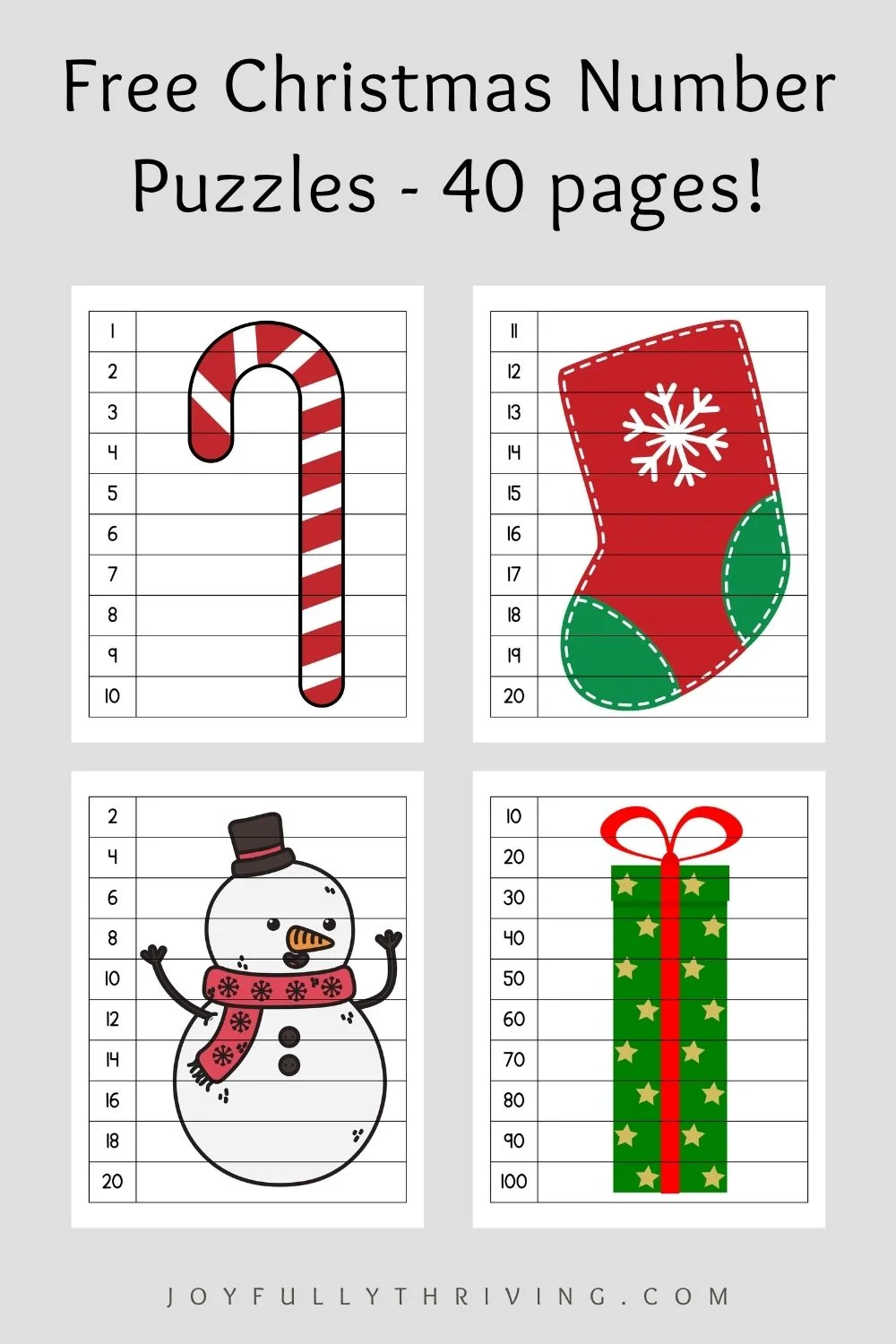
These Christmas picture puzzles turn number practice into a hands-on activity: children arrange numbered strips in sequence, then glue them down to reveal a holiday picture. The printable set has 40 puzzles across four number patterns, with color and black-and-white versions, so you can choose an activity that fits the numbers a child is learning.
The puzzles are designed for preschool and Kindergarten children, and they can work at home, in a homeschool setting or as a classroom math center. Children practice recognizing numbers and putting them in order while also cutting and placing paper strips. The finished picture gives them a visual check: when a strip is out of place, the image may not line up.
Four number patterns, in two printable styles
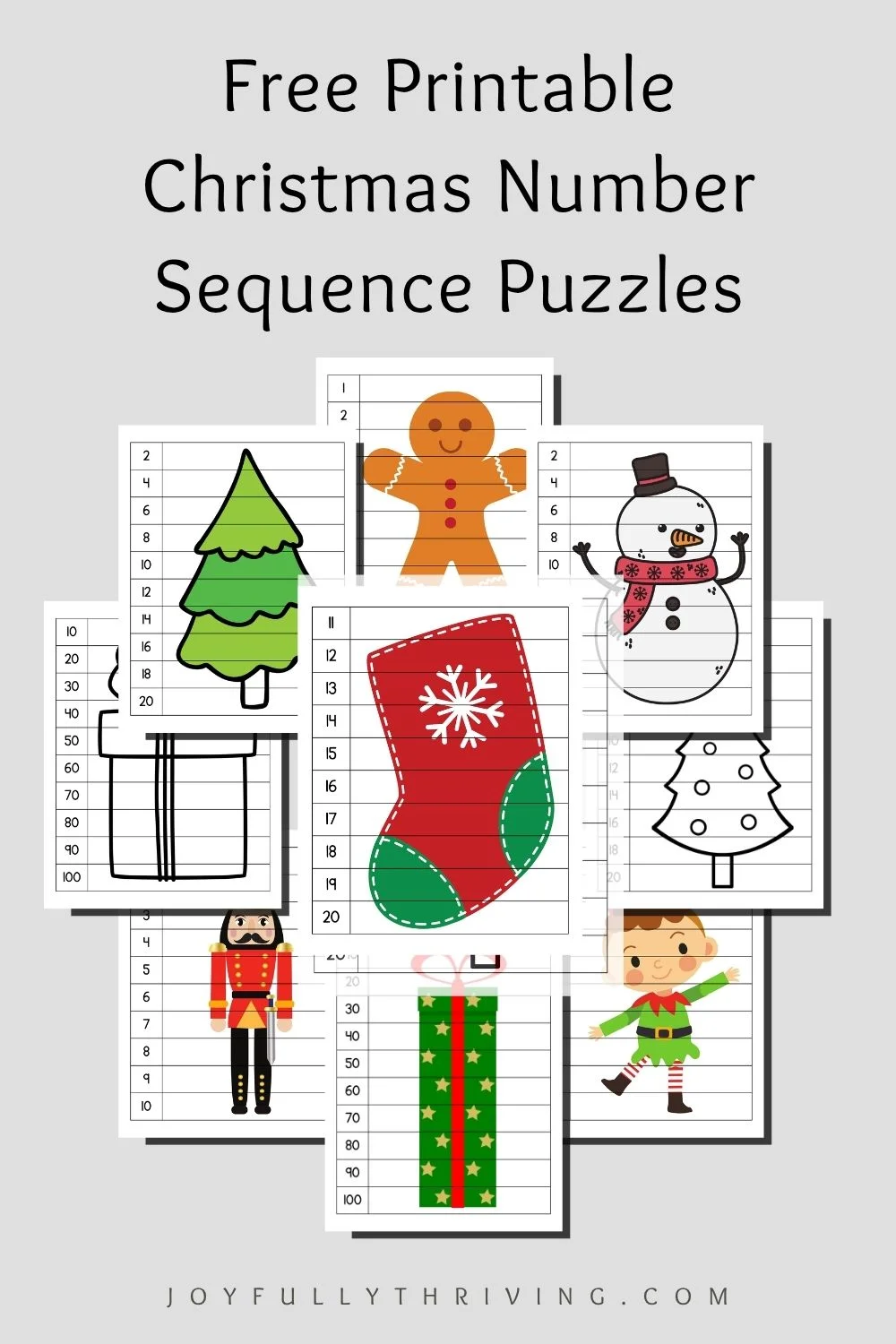
The collection includes 20 color puzzles and 20 black-and-white puzzles. Each style has five puzzles for each of the four number sequences:
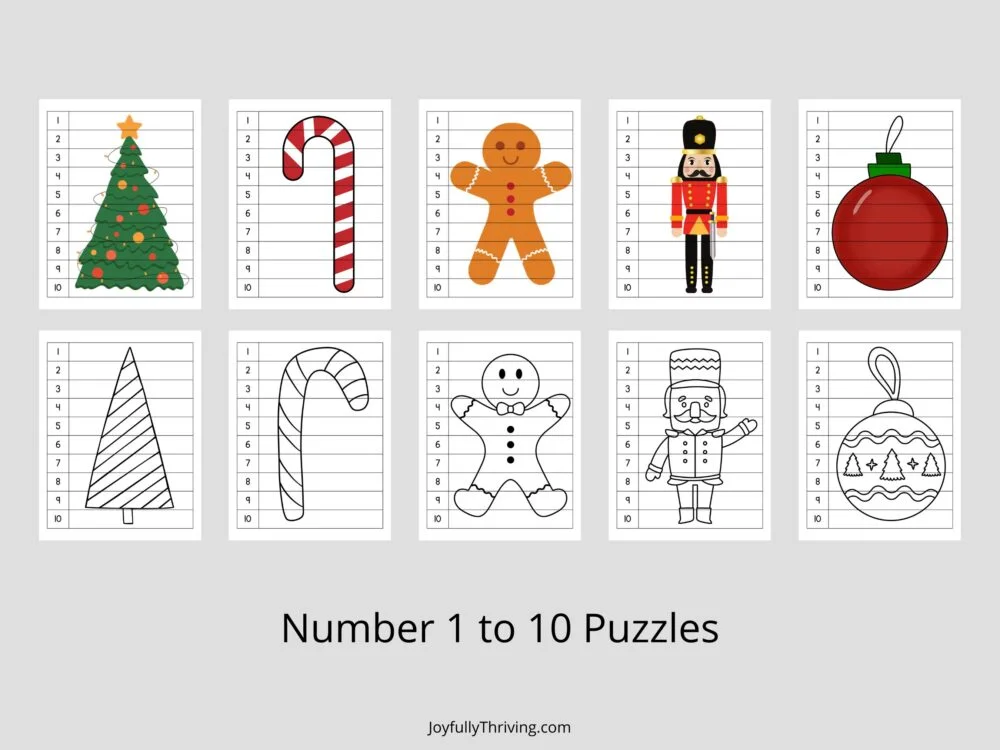
- Numbers 1 to 10
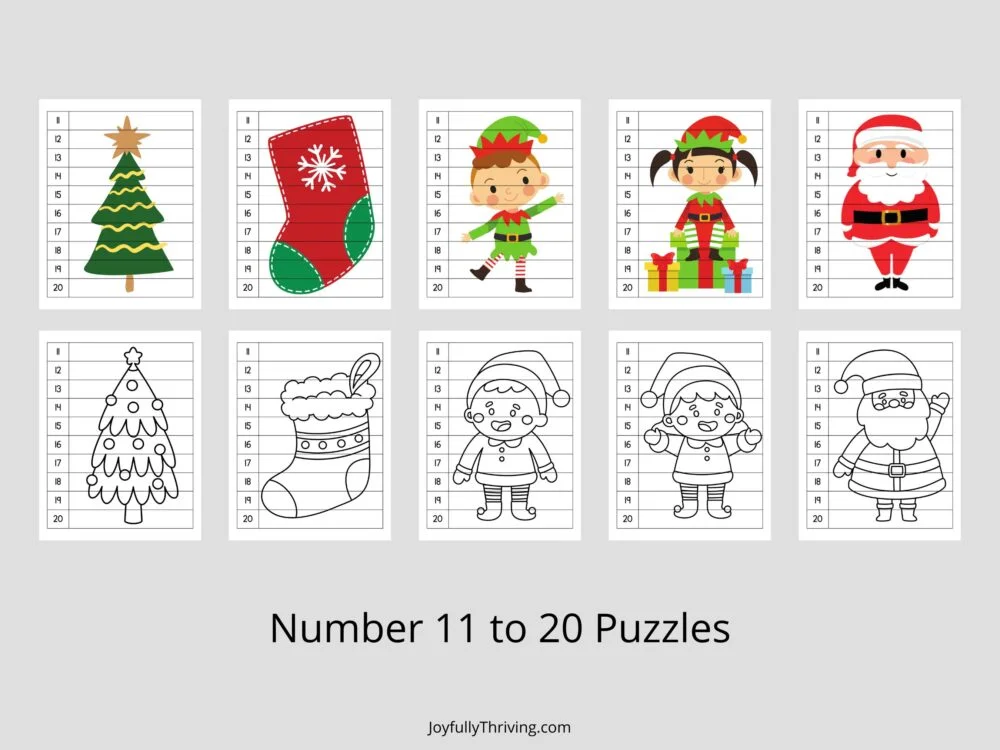
- Numbers 11 to 20
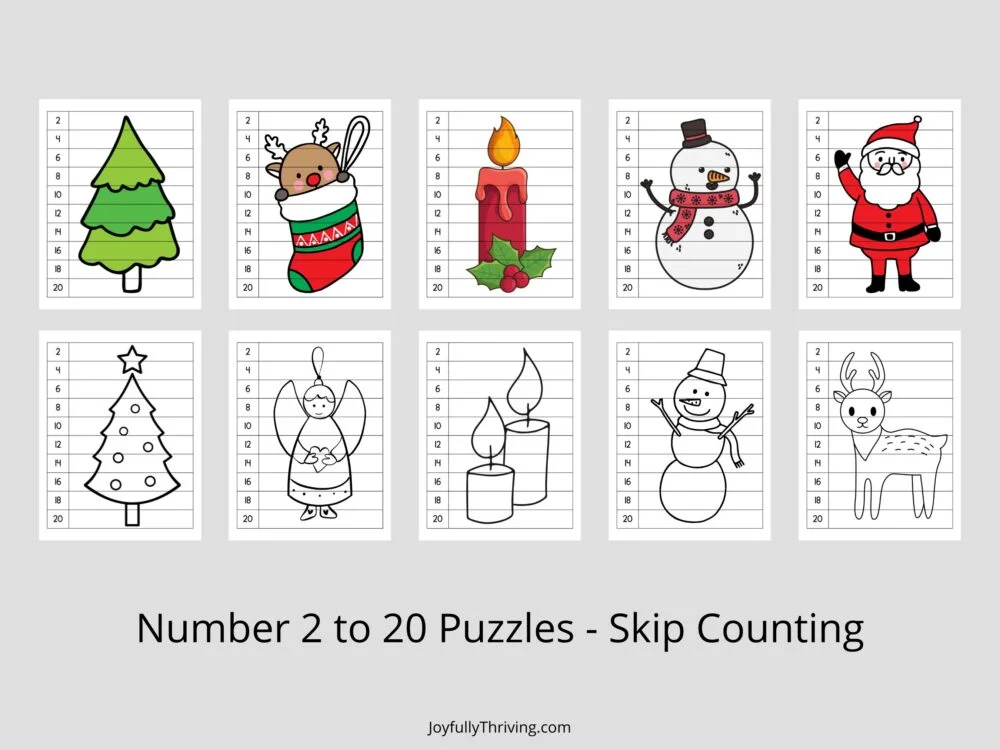
- Counting by 2s from 2 to 20
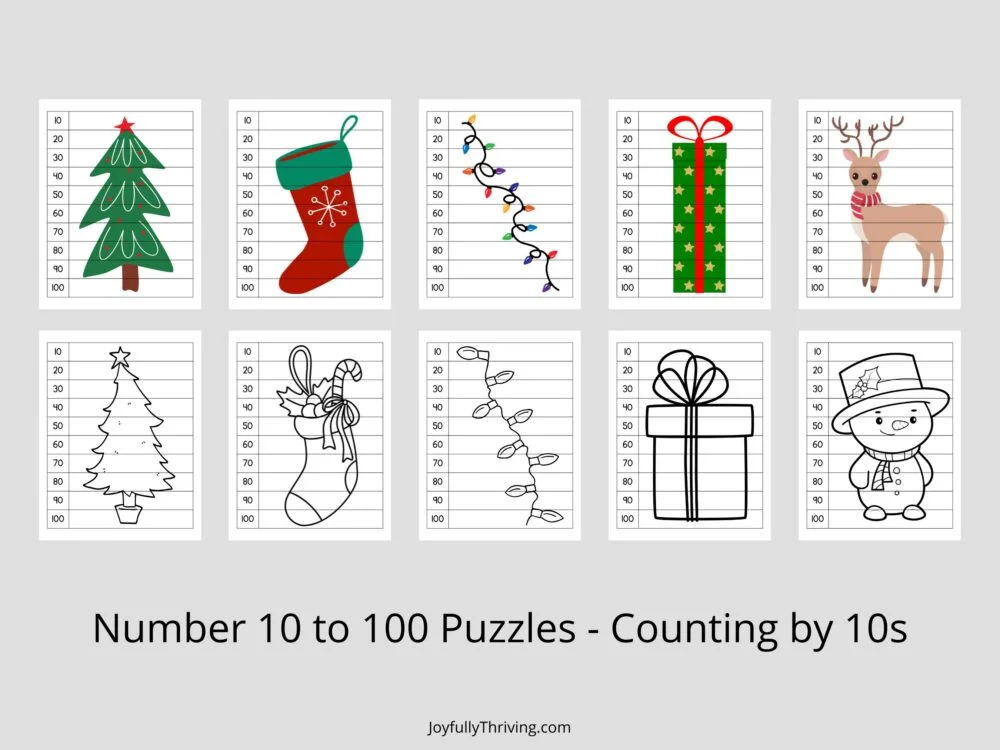
- Counting by 10s from 10 to 100
The pictures include Christmas trees, stockings, candy canes, gingerbread men and other seasonal designs. Each download also includes blank number pages where children can place the matching puzzle strips. You can download either version or both, and there’s no need to print the whole set: select one picture and its number sequence, then print that puzzle and its matching page.
The choice of number pattern makes it easier to pick a starting point. A child building familiarity with numbers can begin with 1 to 10. Teen numbers, skip counting by 2s and counting by 10s offer other kinds of practice. If several children are working on different skills, the different sequences let them use the same type of activity at their own level.
Start with the sequence that fits
For children learning to recognize and order numbers from 1 to 10, the first group includes Christmas trees, candy canes, gingerbread men, nutcrackers and ornaments. Arranging the strips reveals the chosen image, giving the activity a clear endpoint as the child works through the sequence.
The 11-to-20 puzzles focus on teen numbers and include Christmas trees, stockings, elves and Santa pictures. For children ready to move beyond counting in ones, the skip-counting group goes by 2s from 2 to 20. Saying the sequence together before arranging the strips can give children a verbal prompt to use as they work.
The final group counts by 10s, from 10 to 100. Its pictures include trees, stockings, lights, presents and winter characters. This option suits children who are ready to practice that sequence; the other number ranges remain available for children working on earlier patterns.
Prepare the cut-and-glue activity
You’ll need the printed puzzle, its matching blank number page, scissors and a glue stick. Regular printer paper is suitable for the activity. Print the picture page and the blank page for the same number sequence, so the strips have a corresponding place to go.
- Choose and print: Pick a picture and sequence, then print the puzzle and its matching blank page.
- Cut the strips: Cut along the horizontal lines. Younger children may do better if an adult prepares the strips first; children who are practicing scissor skills can cut with supervision.
- Arrange the sequence: Place the strips on the blank page in number order. Check the order together before using glue.
- Finish the picture: Glue each strip in place to complete the image.
The number sequence is the main learning task, while cutting, handling and positioning the strips add fine motor practice. Looking at how the picture fits together can also help children spot a strip that needs another look. A pause to say the numbers aloud gives them another way to check the order.
Make the puzzles reusable
For repeated use as a math center, print the puzzles on cardstock. Cut the strips apart before laminating, then laminate the pieces and trim them. Children can arrange the strips on a table or use the matching blank number page as a guide, without gluing anything down.
Store each puzzle in its own bag or envelope to keep the pieces together. Starting with one puzzle at a time can make setup and sorting easier, especially for younger preschoolers. At home, let the child choose a favorite picture and work through it together. There’s no need to finish every puzzle: choosing the sequence being practiced keeps the activity focused, and the other options can be saved for another day.
Choose a version to print
Both free downloads include all four number sequences and their matching blank pages. The color file has 20 picture puzzles; the black-and-white file also has 20 and uses less color ink. Print only the pages you plan to use, or print extra copies for children sharing a classroom activity.
Download the Christmas number puzzles in color.
Download the Christmas number puzzles in black and white.
For another seasonal activity, try the Christmas shadow matching printable, where children pair pictures with their shadows. More printable activities are available in the free printables collection. Choose one number pattern, prepare its matching page, and let the picture take shape strip by strip.