Unused Subscriptions: A Practical Money Check for Talk Money Week 2026
A survey found many UK adults have paid for services they no longer use. Review renewals, plan for annual bills and take one manageable step.
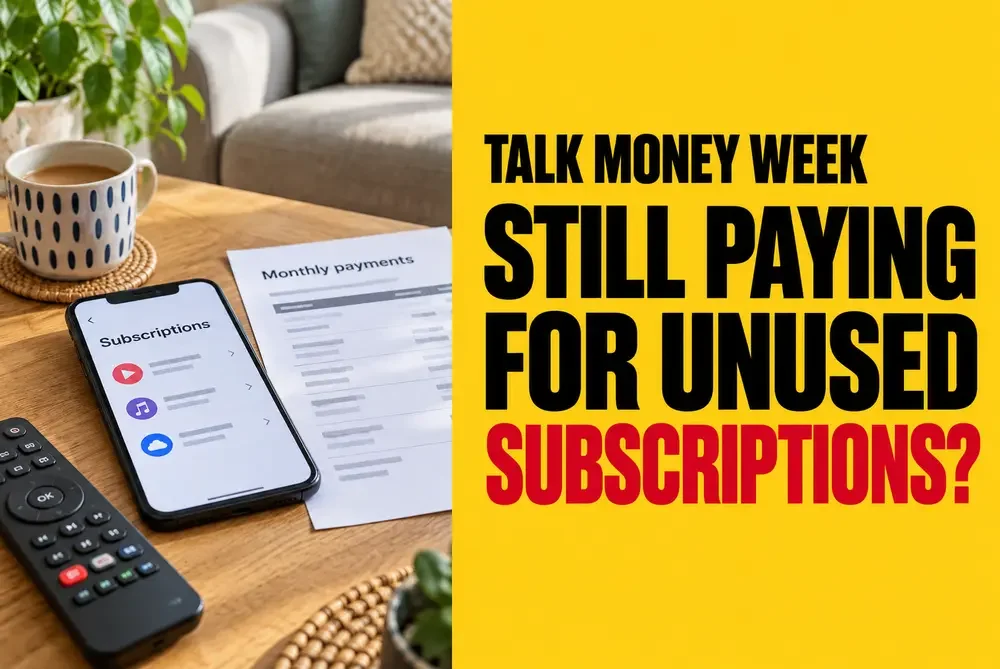
A forgotten subscription can keep taking money long after it has stopped being useful. But the point of a spending check isn’t to cancel everything: it’s to see what you’re paying for, decide what still earns its place and make room in the budget for costs that arrive less often.
A YouGov survey for the Money and Pensions Service (MaPS) found that 31% of UK adults had paid for a subscription or service they no longer used. The survey covered 2,134 UK adults online from 24 to 29 September 2026, with results weighted to represent the UK adult population. It also found that 48% had hidden or played down spending from a partner or family member. That result doesn’t explain why people did so or establish that each situation involved debt.
The findings accompany Talk Money Week, which runs from Monday 2 to Friday 6 November 2026. Its theme, “It All Counts”, encourages people to take a manageable step with their finances. That might mean finding one renewal date today, then tackling other bills another time.
Check the full year, not just this month
Monthly bank and card statements can help you spot recurring charges, but they may not show annual memberships or services paid once a year. MoneyHelper recommends looking back over a year when reviewing subscriptions. If that feels like a large job, review a few months at a time and keep a list of charges you want to check.
Consider whether you use each service, whether you’d choose it again today and when its next payment is due. A £9.99 monthly subscription would cost £119.88 over 12 months if the price stayed the same. Cancelling future renewals could free up that amount over a year, though an annual plan you’ve already paid for may not save money until its next renewal.
Keep services that suit your household and fit your budget. The useful question is whether a payment still provides enough value for its cost, not whether subscriptions are automatically bad. If you decide to cancel, check the notice period, contract end date and any early-exit charge. Save the cancellation confirmation so you can refer to it if another payment appears.
The Financial Conduct Authority explains how to ask your card issuer to stop a recurring card payment. You can make that request without contacting the business first, but stopping the card payment may not end the contract. Check the agreement as well: you could still owe money if you’ve committed to a minimum term or haven’t cancelled properly.
Make room for bills that come once a year
A monthly budget can look comfortable until car insurance, an MOT or an annual membership falls due. MoneyHelper’s free Budget Planner lets you enter costs over different periods and works out a monthly average. For example, setting aside £30 a month for a £360 annual bill spreads the cost across the year and makes it visible before renewal time.
Carolyn Pearson, 61, a self-employed woman from Leeds, told MaPS that using MoneyHelper helped her account for insurance, motoring expenses and subscriptions she hadn’t fully included before. She had already used spreadsheets and monthly goals, but adding those costs showed that her personal budget was running short. Her experience makes a practical point: a useful budget includes irregular spending as well as direct debits and other predictable monthly bills.
You can track these costs in a notebook, spreadsheet or free planner. For help keeping an eye on household contracts, the Nous review describes the writer’s experience with a service that monitors bills and some subscriptions. You don’t need to pay for a new service to begin reviewing the money leaving your accounts.
Compare what you pay with what you use
Carolyn also told MaPS she renegotiated her E.ON tariff and reduced her gas and electricity bills by £20 a month. That was her reported outcome; another household’s result could differ according to its tariff, energy use and available deals.
For households in Great Britain, Ofgem’s guidance explains how to compare energy tariffs, including options from your existing supplier. Compare using your annual consumption and check whether leaving a fixed tariff early would bring a charge. A smaller monthly payment on its own doesn’t show whether the energy costs less; payment plans can spread the bill differently.
Check whether extra support could help
Cutting an unused subscription can help with day-to-day spending, but it may not close a gap when essential costs already exceed income. If your income or household circumstances have changed, MoneyHelper’s free benefits calculator can indicate support you may qualify for. Its results are a guide, and you’ll need to follow the application process. It can also point to possible help such as grants and cheaper tariffs.
If you’re falling behind on payments, MoneyHelper’s debt advice locator can help you find free advice. You don’t need to make your finances look tidy before asking for help understanding them.
Start money conversations with a shared task
Talking about money can feel easier when you begin with a specific decision: which subscriptions to keep, or how much is available for Christmas. MoneyHelper suggests focusing on shared goals instead of judging who handles spending well. You could ask, “Can we look at what’s leaving the account so we know what we can afford next month?”
Open conversations don’t mean that someone should control your money or demand an account of every purchase. If you’re worried about a partner’s reaction or they control your access to money, seek confidential support rather than starting a conversation that could put you at risk. MoneyHelper also provides guidance on financial abuse and finding help.
Pick one payment, bill or money worry and give it a clear next step: check a renewal date, add an annual insurance bill to your budget or arrange a conversation with an adviser. Talk Money Week’s theme is a useful reminder that a small, completed task can make the next one easier to approach.